A timer can remind a baker to look, but it cannot make two dough stages identical. A yeast-bread recipe may first ask the dough to rise as one mass, then ask shaped pieces to rise again. This original reading workflow keeps those requests separate. It is not a formula or bake report: choose a complete reliable recipe for ingredients, mixing, shaping, endpoints and baking first.
Copy two requests before mixing
King Arthur Baking distinguishes the initial bulk rise from the rise after shaping. It explains that conditions affect timing, so a recipe’s time range is a guide. That does not authorize a universal clock rule.
Imagine a baker making one selected pan-loaf recipe. The original preparation note has separate bulk and shaped lines. Each holds the actual recipe instruction, its time window if supplied and the condition to check. Leave an unclear endpoint as a question for the publisher before mixing. A remembered instruction from another loaf should not silently fill the gap.
Track the mass in a suitable vessel
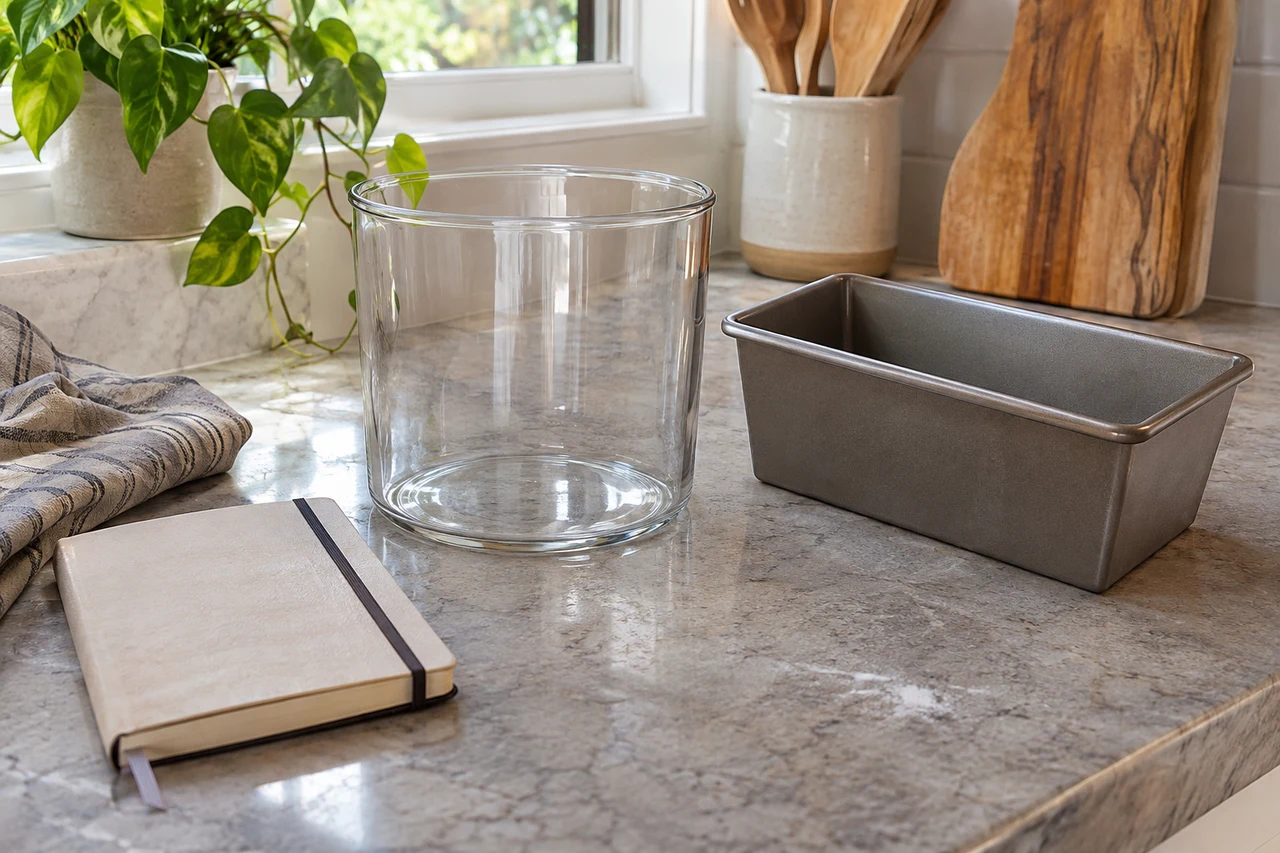
King Arthur suggests a straight-sided vessel for bulk tracking, with a starting-height mark if needed. If the recipe requires doubling, this can help observe it. This article does not instruct every dough to double.
For the imagined baker, put the mark beside the real starting level once the dough exists. Its purpose is comparison in the same vessel. A curved bowl or container change can alter what height means. Ask whether a suitable existing vessel makes the chosen request legible before buying a professional-looking bucket. Equipment does not establish the recipe’s endpoint.
Read the shaped stage separately
King Arthur describes a lightly floured finger indentation as a second-rise check: an indentation that remains differs from rapid rebound. Fragile dough collapsing is another condition. Keep the actual recipe authoritative; this is no universal verdict for every dough.
The original second line begins after the recipe’s shaping step. It does not inherit the bulk mark or assume a remembered percentage describes the shaped piece. Record observations only when they occur. No touch check was performed here. A verbal description cannot demonstrate that a particular dough is ready to bake.
Keep the result useful for next time
King Arthur encourages notes on timing and conditions. For the imagined record, keep recipe identity, vessel or pan, stage observations and actual actions together. This feature supplies no rescue method or replacement oven schedule.
If a result disappoints, preserve what was done instead of rewriting the note as success. A question can then return to the publisher with its stage intact. A special proofer does not follow automatically from a slow rise. First decide whether the difficulty was unclear instructions, an unsuitable observation method or something requiring recipe-specific help.
Sources & further reading
Published sources for the details and examples discussed in this story.