A tray of vegetables is a useful answer to an evening when the fridge holds several small amounts rather than one complete recipe. The method works best when you group pieces by how they cook and leave room on the tray. Treat the timings as observations to make in your own oven, not a reason to ignore what is happening in front of you.
Gather a manageable combination
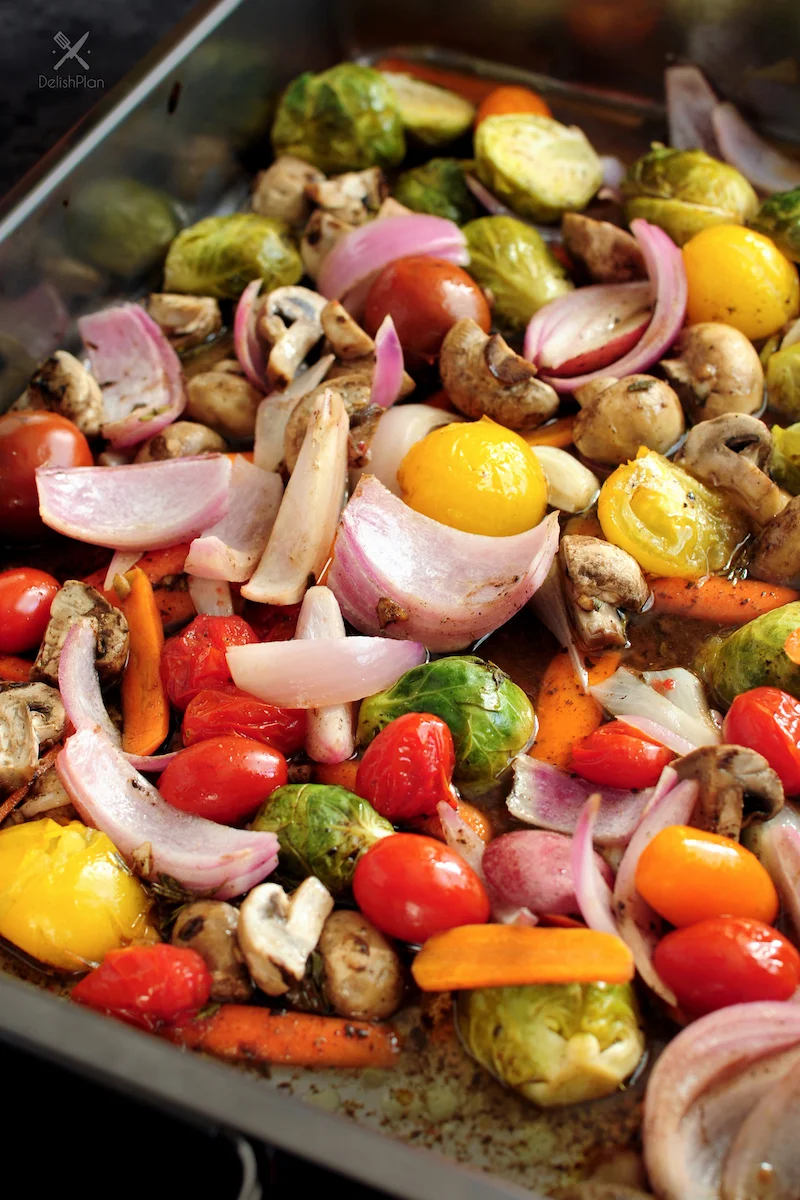
For two generous vegetable portions, start with roughly four cups of prepared vegetables, a tablespoon or two of olive oil and seasoning to taste. Try carrots, cauliflower and red onion, or courgette, peppers and onion. Add a familiar canned bean or another separately prepared accompaniment when you want to build a fuller meal.
Wash produce appropriately and use clean equipment. Trim and cut the vegetables into pieces that are comfortable to eat. Denser vegetables generally benefit from smaller pieces than very quick-cooking ones. If the contents of the fridge are especially varied, use two trays or add tender vegetables later rather than expecting every piece to finish at once.
Give the tray enough room
Heat the oven to around two hundred degrees Celsius, or the appropriate setting for your oven, and use a suitable rimmed tray. Toss the prepared vegetables with enough oil to coat lightly, then spread them in a fairly open layer. A crowded mound will behave differently from a single layer, so split the batch when needed.
Follow the tray and liner manufacturers' heat limits if using a liner. Keep handles and edges clear, and use appropriate oven protection. Set a reminder to look partway through cooking rather than disappearing until a fixed finish time. Turn the pieces when useful, noticing whether one corner of the tray is browning faster than the rest.
Season when you can taste the result
Start checking after about twenty minutes, understanding that size, moisture and the oven can change the cooking time substantially. Continue until the vegetables are cooked to your preferred tenderness and pleasantly browned where appropriate. Remove quick-cooking pieces if needed rather than letting them burn while waiting for a dense carrot to soften.
Finish with something you already enjoy: a little lemon juice, chopped herbs or a spoonful of a suitable sauce. Add strong flavors gradually so the tray remains adaptable. Serve with bread, grains or another dish prepared under its own safe-cooking requirements. There is no need to buy a specialist roasting blend for a method built around ordinary ingredients.
Put tomorrow's portion away properly
If you intend to save some, portion it before the whole tray sits through a long evening. USDA advises prompt refrigeration in shallow containers, never leaving leftovers out for more than two hours, or one hour when the outside temperature is above ninety degrees Fahrenheit. Follow the full food-safety guidance for storage and reheating.
Label the container with its contents and date, then plan a specific use within the recommended refrigerated period of three to four days, or freeze appropriately for longer storage. A planned lunch is more useful than an anonymous box discovered later. Clean the tray according to its care directions once it is safe to handle, without abrasive shortcuts the finish does not tolerate.
Sources & further reading
Published sources for the details and examples discussed in this story.