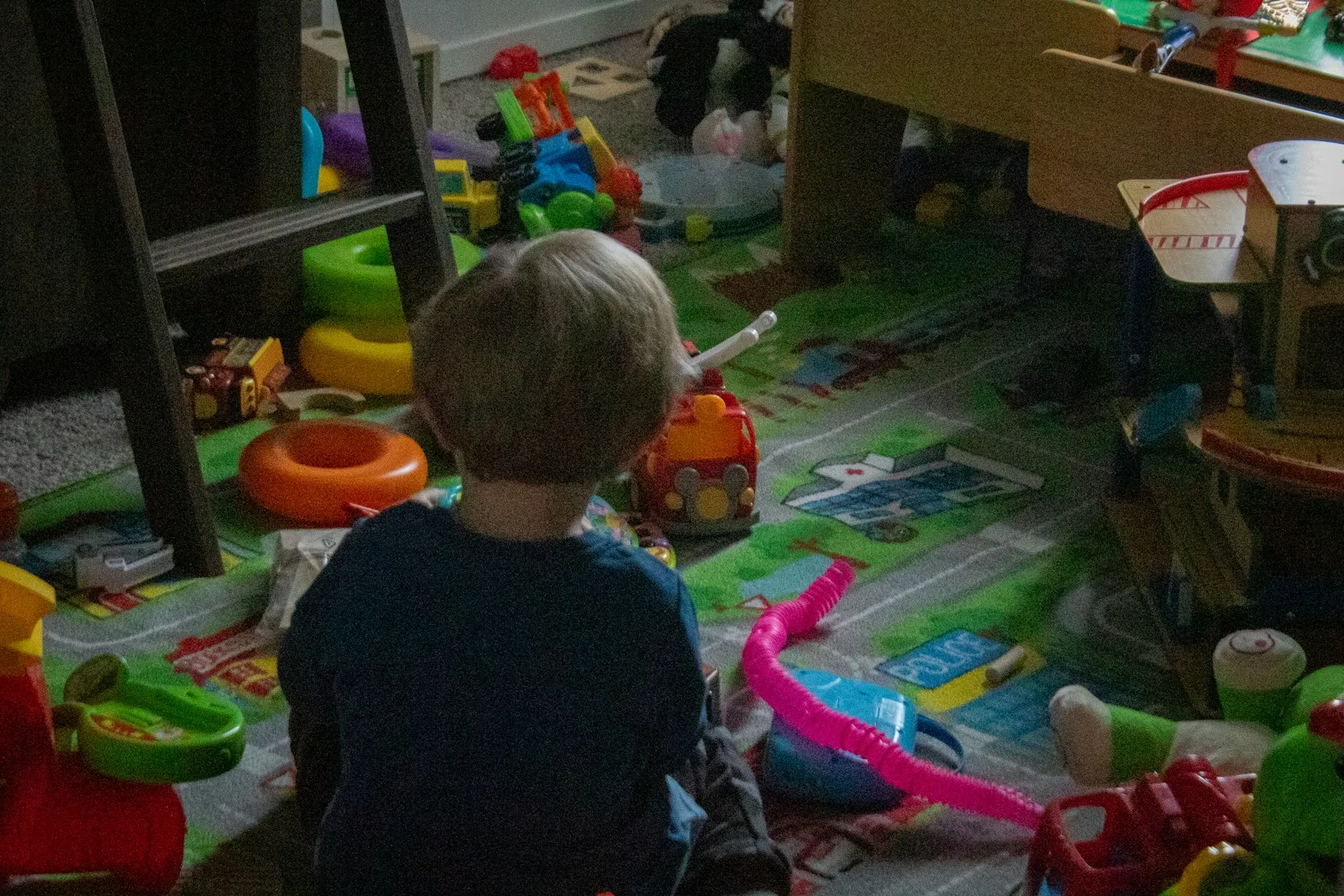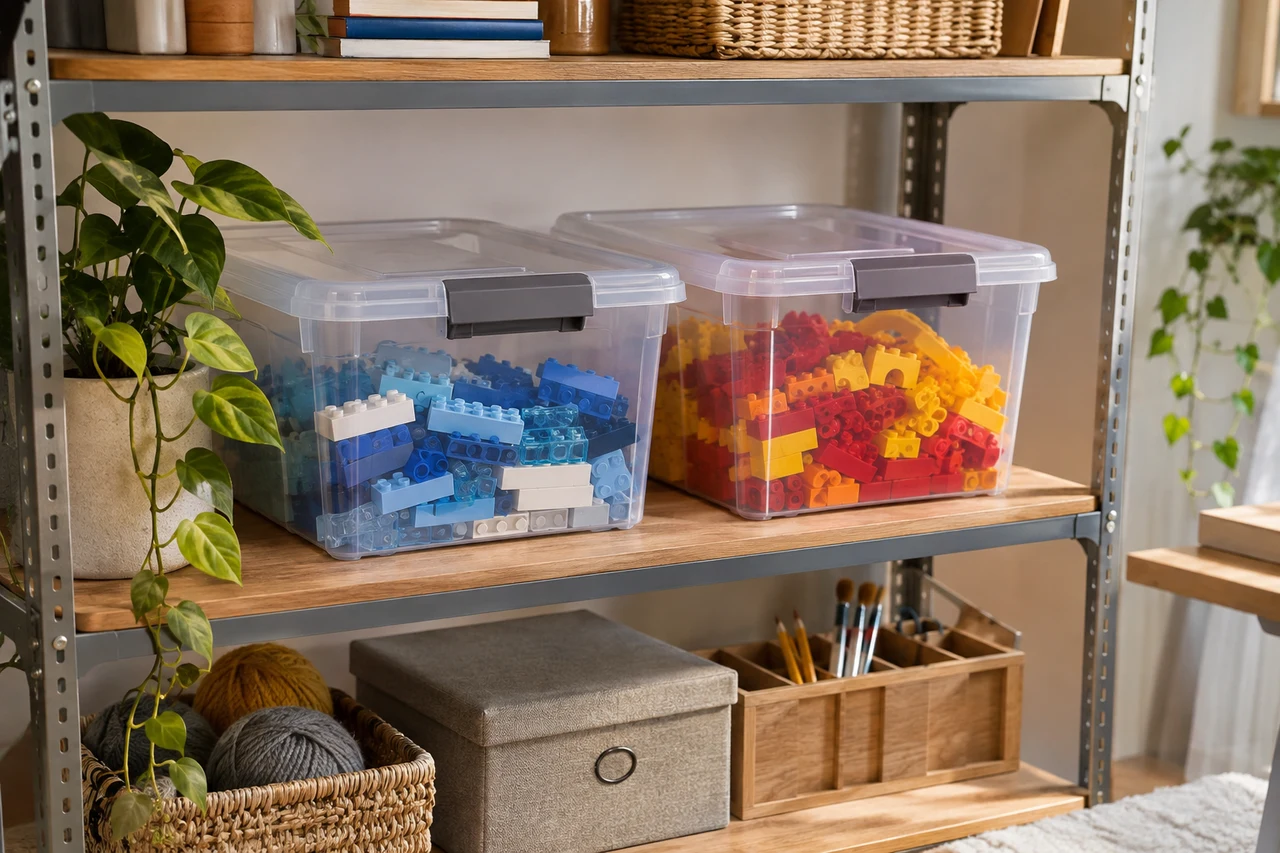
A box can have the right age label when it leaves a shop and become a different collection once pieces from another set are poured into it. That is the practical problem in a home where a toddler's building bricks and an older child's vehicle kit share a room. The label belongs to the identified product, not automatically to everything a household later puts in its container. Two specific LEGO US pages make the distinction concrete. DUPLO Deluxe Brick Box 10914 is labeled 1½+, while Classic Creative Vehicles 11036 is labeled 5+ and warns of small parts and a small ball, with a restriction against use by children under three. These are different pieces of age and warning information to preserve, rather than two interchangeable descriptions of “bricks.”
Keep the product identity attached to its label
Start with the set number and name, not the color of the storage box. A note reading “10914 — DUPLO Deluxe Brick Box — 1½+” identifies the first product. “11036 — Classic Creative Vehicles — 5+; small-parts/small-ball warning” identifies the second. Keep the actual packaging and instructions available so a short household note does not become the only source of safety information.
The two labels answer different questions. The 5+ guidance does not mean every child on their third birthday should use the Classic set; the under-three warning is not a replacement for its stated age guidance. Equally, reading 1½+ on the DUPLO box does not apply that label to an unrelated item dropped inside it.
For this example, imagine a two-year-old using the identified DUPLO set and a six-year-old wanting to build vehicles. Their interests may overlap: both might want a garage or a road. That shared idea is not evidence that both collections are suitable for the younger child. Begin with the actual children's ages and each product's information before deciding which materials enter a shared activity.
Change the arrangement before combining the contents
The original household plan is to keep the two sets separate. The older child's Classic build takes place in an adult-managed area that the younger child does not use for that activity. Before the toddler uses the shared room, the Classic pieces and small components are put away. This implements the CPSC's advice to follow packaging guidance and keep small-part toys and small balls away from children younger than three; it is not a guarantee that a particular shelf or container makes a room safe.
The distinction becomes clearer during a pretend cleanup. Someone brings the DUPLO box into the older child's build area because it looks roomy. Filling that box with leftover Classic pieces would make the container's appearance misleading. The better next action in this plan is to return the Classic collection to its identified storage, not to attach the toddler set's label to the mixture.
A second case reverses the problem: an older child carries a finished model into the toddler's play area to show it. Calling it one model does not erase the identity of its components. The separation plan includes finished builds as well as loose pieces, so a model is not left in the younger child's accessible activity space simply because it has already been assembled.
This is also why a request to “watch for the little pieces” is too vague as the whole arrangement. Give another adult the actual set identity and explain which collection belongs outside the younger child's activity. The relevant safety guidance is not suspended because an older sibling or visitor knows how to build with the set.
An unidentified mixture needs more than a new sticker
Suppose a secondhand box arrives without reliable set information. Do not call it 10914 merely because it resembles the container pictured on the current product page. The household now has an identification problem, not just a missing label. Set it aside from the younger child's play while the responsible adult establishes what the items actually are and obtains the appropriate product information.
Avoid turning this exercise into a homemade small-parts certification. This article supplies no tube test, size rule or procedure for declaring an unidentified piece safe. The useful output is the decision not to let a familiar container or a guessed brand category stand in for the actual contents.
When choosing another gift, give the buyer the intended child's age and the exact product information needed. Asking for “something that works with the bricks” leaves out the question the household is trying to answer. A new set is useful only if its own guidance fits the intended user and the arrangement the adults can actually maintain.
Sources & further reading
Published sources for the details and examples discussed in this story.