The rain has ruled out the playground, and the kitchen table still needs to become a dinner table later. An art tray can make that change of plans easier. Start with one manageable activity and a clear ending, rather than a giant assortment that takes longer to sort than to enjoy.
Choose the kind of afternoon
Drawing needs paper and a few crayons. Painting needs a protected surface, a place for wet work and enough adult attention for spills. Cutting and collage add scraps, tools and another cleanup step. Pick the activity you can supervise today; there is no obligation to offer every medium at once.
For siblings of different ages, avoid making one shared tray the default. An older child's small collage pieces may not suit a younger child. Keep their supplies and workspaces appropriately separate, and use the age guidance on each product. A successful afternoon can include two different projects that happen alongside each other.
Shop for clear information
CPSC's art and craft guidance recommends materials intended for children and careful attention to labels. Keep packaging or photograph the instructions before moving supplies into plain containers. An attractive unmarked bottle makes it harder to check what is inside, how it should be used and whether a warning applies.
Begin with a small set of washable tools in useful colors, not a large case full of duplicates. Washable is a care claim to check on the particular product, not a promise about every fabric or painted surface. Reserve adult craft chemicals and specialist equipment for their intended users rather than borrowing them for convenience.
Give wet work somewhere to go
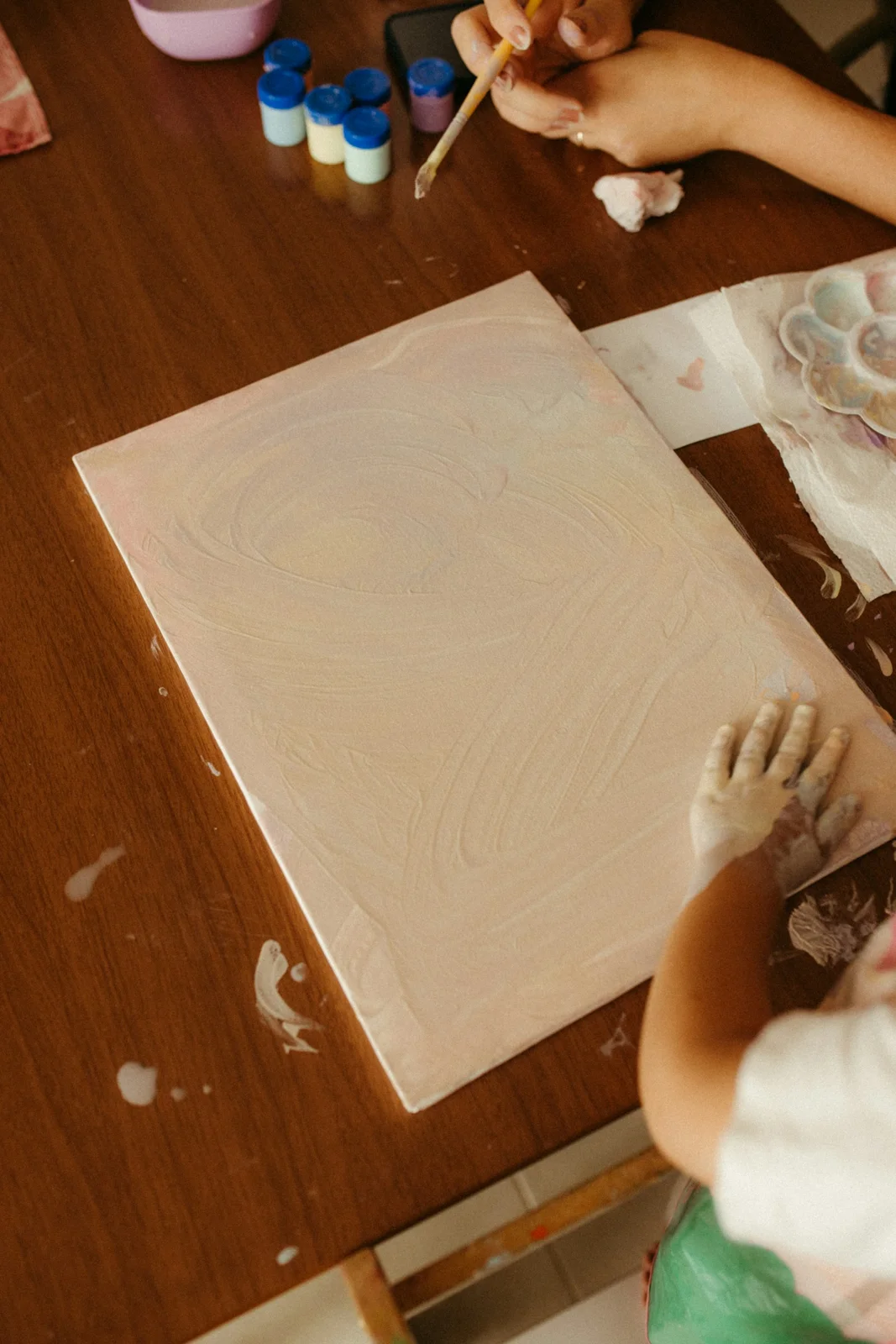
A tray with a modest rim can contain the supplies, but it is not necessarily a painting surface. Add a suitable washable table covering if the table needs protection. Put water where an accidental elbow will not send it onto a laptop, and keep drinks and snacks outside the art area.
Before starting, decide where the finished pictures will dry. A clear shelf that is out of reach of pets may be more useful than a dedicated drying rack. Avoid carrying dripping work across a busy room. Let the child help select a safe resting place while everything is still dry and easy to move.
Make the reset part of the plan
Bring out only the amount you expect to use. Keep surplus supplies stored appropriately away, rather than balanced around the table. Close lids as each material is finished, collect scraps into a separate container and leave enough time to wash hands after the activity. Supervision still matters when a label says non-toxic.
Afterward, note what actually ran out. Replace a useful glue stick or paper pad before buying an entire themed kit. If setup repeatedly feels difficult, simplify the activity first. A smaller tray that gets used and put away is more helpful than a perfectly organized collection that stays in the cupboard.
Sources & further reading
Published sources for the details and examples discussed in this story.