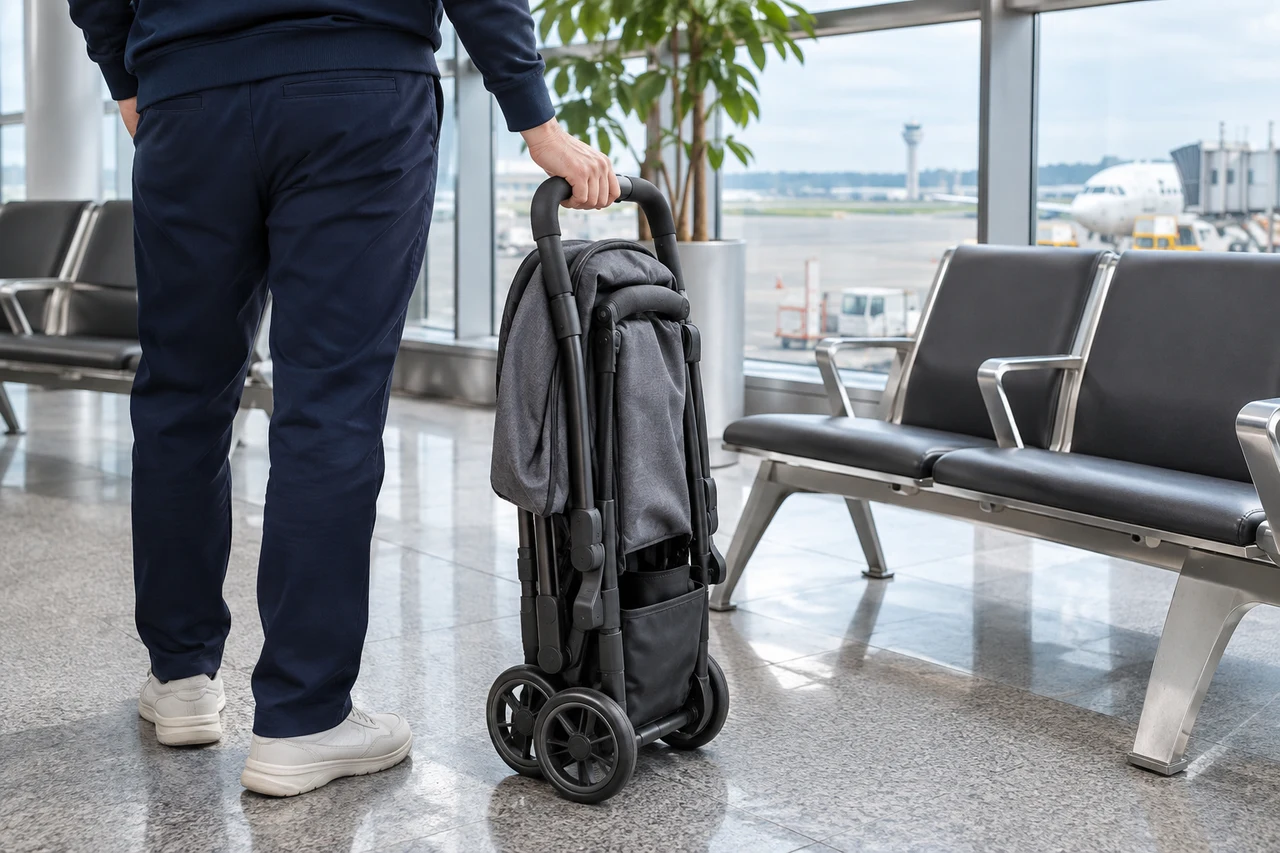
Gate-checking a stroller solves only part of the airport journey. It tells you where the item leaves your hands, while the family still needs to know where it returns and what happens in between. American Airlines' published guidance describes gate collection after the flight, but its children's page also distinguishes items that must be checked at the ticket counter. Start with that distinction before treating every wheeled child item as the same airport companion.
Choose the handover for the actual item
American's traveling-with-children page says each ticketed customer traveling with a child or to adopt may check one stroller and one car seat free. Both can go at the counter; if using the gate option, one item goes at the gate and the other at the counter. The page sends non-collapsible strollers and stroller wagons without built-in child safety straps to the counter; other strollers should be checked at the gate before boarding. Counter handling does not itself waive fees: the same page lists wagons without built-in safety straps as regular bags with regular fees.
Imagine a fictional parent taking a collapsible stroller and a car seat, choosing to check the seat at the counter and use the stroller until the gate. That is one plan within the stated split, not permission to send both items to the gate. Another family choosing the counter for both has a different airport interval to plan because neither item remains with them afterward.
Identify the actual model before relying on a description like compact or travel-friendly. This article gives no folding instructions or judgment that a particular stroller belongs in one category. If the item's construction or category is unclear, resolve it with the airline using the real item details instead of buying a lighter-looking accessory to make the question disappear.
The decision can affect the whole departure plan. A parent expecting to wheel an item through the terminal has not made the same arrangement as one who hands it over at the counter. Decide who will manage the child and other belongings through the interval without the stroller, using arrangements appropriate to the family's actual needs.
Attach an arrival question to the departure tag
For the stroller that is actually accepted at the gate in our fictional example, the useful conversation includes the return point. American's Flying with American page says strollers should be gate-checked before boarding and picked up at the gate after the flight, free when traveling with a child or to adopt. That is a published return arrangement, not a timed promise that the item will be in your hands immediately when the aircraft door opens.
Before handing it over, ask the agent where to leave this stroller and where to collect it after this flight. Keep the issued identifying record with the family member who will collect it. These are original handoff habits; this article does not invent the wording, color or attachment system of an airline tag.
An instruction given for one flight should stay attached to that flight. If an itinerary has another segment, ask how the item will be handled at that stop rather than copying the first arrival plan onto every airport. A gate number can change, and “at the gate” still needs to become an instruction the traveler can follow in the actual terminal.
Write the answer in a short family message if responsibility is being shared: which item was handed over, who has its record and who will ask about collection. There is no need to send a full itinerary or unnecessary personal information to everyone in a group chat. The message exists to avoid two adults each assuming the other collected the stroller.
Plan the interval without promising it away
In our fictional arrival, the parent has left the aircraft but has not yet received the stroller. The family should not treat those two events as simultaneous when choosing how to manage its belongings. Keep the child's arrangements appropriate while following the actual airline staff's collection instructions. The public guidance supplies no guaranteed number of waiting minutes.
If the item is not where the staff directed the family to collect it, ask staff before leaving that collection area on an assumption. American's broader arrival guidance directs passengers with missing or damaged checked items to its baggage service office. Preserve the actual item and flight information needed for the enquiry rather than replacing the missing stroller with an invented story about where it must have gone.
Sources & further reading
Published sources for the details and examples discussed in this story.