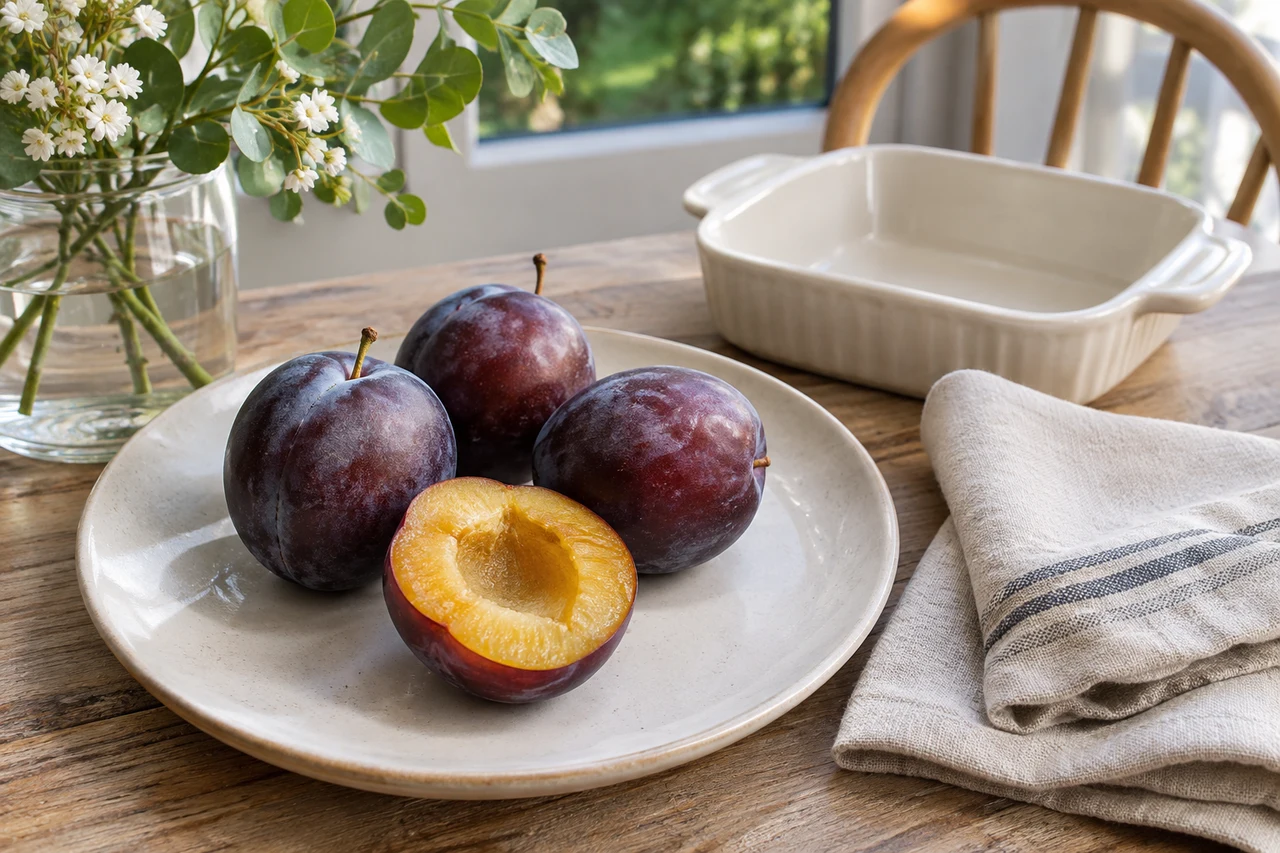
Roasting plum halves keeps the fruit recognizable while a small measured mixture collects in the dish around it. This original two-portion proposal is different from a mashed or reduced stovetop compote: the halves remain the main thing served. It has not been kitchen-tested, so the timing is a starting point and the fruit’s actual tenderness needs checking.
Weigh the usable fruit and the short liquid list
Use 400 grams prepared plum flesh after removing stones and unsuitable parts, 1 tablespoon maple syrup, 1 teaspoon lemon juice and 20 millilitres drinking water. No cream, crumble topping, extra sugar or spice is required. Choose fruit whose condition suits the diners and the proposed preparation; this recipe does not identify a cultivar or promise its sweetness.
Use a suitable ovenproof dish around 20 by 15 centimetres, allowing the halves to sit in one layer, cut sides upward. If the actual fruit cannot fit without stacking, use appropriately larger ovenware rather than force the stated dish to hold a mound. Heat a conventional oven to 190°C, following its instructions.
Prepare the halves before adding the liquid
Begin with clean hands, a clean board and appropriate utensils. Wash the whole fruit under running water before cutting; FDA advises against using soap on produce. Remove unsuitable parts and discard rotten fruit. Halve the plums and remove each stone, taking care not to leave fragments. Weigh the prepared flesh to obtain the stated amount.
Arrange the halves in the dish. Mix the maple syrup, lemon juice and water separately, then spoon the mixture over the cut surfaces and into the dish. Keep the fruit cut-side up. The measured liquid belongs to this small batch; adding an unrecorded large pour would change the proposed result.
Check the fruit rather than chase a set minute
Put the dish in the preheated oven. Begin checking at about 15 minutes, using appropriate oven protection and a fork to assess a piece. Continue as needed until the flesh yields readily while the halves can still be served as halves. The estimate does not establish doneness for every fruit size, ripeness or oven.
Watch the dish as well as the fruit. If the halves are already tender, remove them rather than leave them to collapse merely to darken the juice. Do not continue until the dish scorches. This recipe does not require reducing the liquid to a separate syrup or mashing part of the fruit.
Spoon the juice with the fruit
Divide the cooked halves between two clean dishes and spoon over their pan juice. Let them reach an appropriate eating temperature. The starting fruit weight does not establish the final cooked weight, and the amount of liquid actually released has not been measured here.
Serve promptly or handle leftovers under appropriate refrigeration guidance; FDA calls for prompt chilling of perishables within two hours, or one hour above 90°F. This proposal supplies no storage life. Lemon is a flavor ingredient, not a measured acidification or preserving process. Before buying a fruit-roasting dish, check whether existing suitable ovenware already provides the single layer and handling required.
Sources & further reading
Published sources for the details and examples discussed in this story.