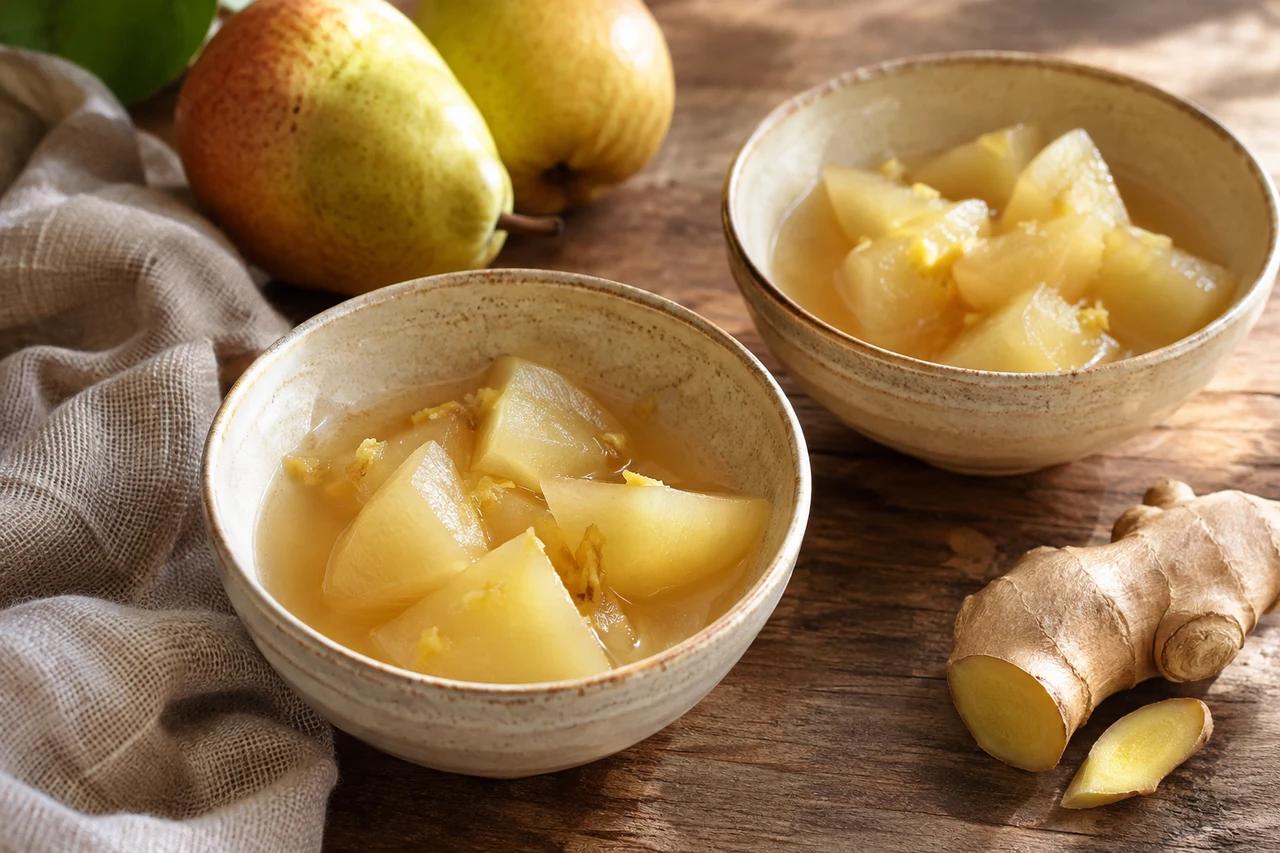
Pear pieces can soften before their liquid has reached the texture wanted for serving. This original stovetop compote proposal treats those as separate stages: covered softening, then an uncovered reduction. It makes two proposed portions from a declared prepared-fruit weight. The recipe is untested; we have not cooked, tasted or timed it. It is not a canning process, a shelf-stable preserve or a claim about nutritional suitability.
Measure the prepared fruit and the whole short list
Use 300 grams prepared pear flesh after coring and removing seeds and unsuitable parts, 5 grams peeled finely grated fresh ginger, 40 millilitres drinking water and 2 teaspoons freshly squeezed lemon juice. Have up to 2 tablespoons additional drinking water available for the softening-stage adjustment only. No sugar, syrup, spice garnish or dairy ingredient is required.
Choose pears suitable for the actual diners and intended use. Begin with clean hands, a clean board, knife, grater, lidded saucepan and spoon. Wash the whole pears, ginger and lemon under running water before preparation; FDA advises washing produce before peeling or cutting and against soap on produce. Keep produce and its utensils separate from raw meat, poultry and seafood.
Soften the pieces under the lid
Cut the prepared pear into roughly 1-centimetre pieces and weigh the required 300 grams. Put them in the saucepan with the ginger and measured 40 millilitres water. Cover and cook gently over medium-low heat, stirring occasionally, until a piece yields readily to a fork. Begin checking around eight minutes; this is a starting estimate rather than a validated cooking time.
If the pan dries before the fruit softens, reduce the heat as needed and add water one tablespoon at a time, up to the stated two tablespoons. Keep the adjustment attached to this stage. A dry pan and a firm centre call for continued attention, not more heat simply to reach an advertised finishing minute.
Change the texture after the pear is tender
Once the pieces soften, remove the lid and stir in the lemon juice. Continue gently, stirring, until the loose liquid reduces to a consistency that can be spooned rather than poured freely. If little liquid remains already, stop reducing instead of forcing a separate timed stage.
Remove from the heat and use a suitable spoon or fork with appropriate care to break down some pieces, leaving others recognizable. That mixed texture is the intended proposal, not a tested pear-variety result. Lemon supplies flavor here; it does not establish an acidity measurement, preservation treatment or guaranteed prevention of browning.
Serve the cooked batch without inventing its final weight
Divide the finished compote into two suitable dishes and allow it to reach an appropriate eating temperature. Each portion begins with half the stated fruit amount, but evaporation and added water mean the finished weight is not established. Any independently chosen accompaniment needs its own ingredients and handling review.
Serve promptly or refrigerate appropriately in suitable shallow containers. FDA calls for refrigeration at or below 40°F and prompt chilling of perishables within two hours, shortened to one hour above 90°F. No refrigerated life for this compote is supplied. An ordinary suitable saucepan can meet the proposed task; buy specialty equipment only for a real need. Later cooking notes would be new observations, separate from this editorial starting recipe.
Sources & further reading
Published sources for the details and examples discussed in this story.