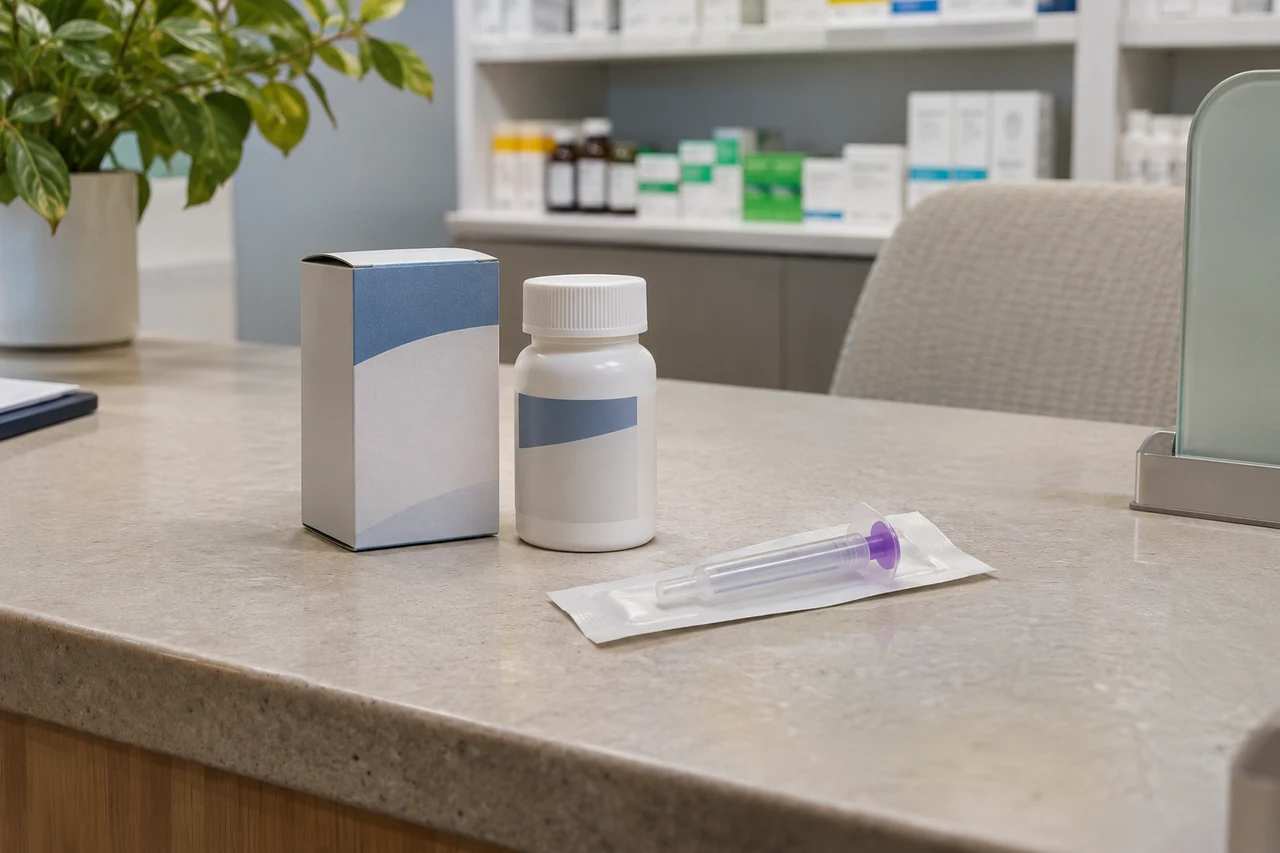
An oral-liquid medicine and a measuring device form a specific pair. A cup that happens to fit over another bottle is not thereby the device for that product. Before trying to measure anything, identify the actual medicine, its complete directions and the device supplied for it. This guide concerns recognizing units and asking about a mismatch. It does not select a medicine, supply a dose, convert a prescribed amount or demonstrate administering a product.
Know what the guidance actually addresses
FDA's May 2011 guidance on dosage delivery devices is addressed to firms manufacturing, marketing or distributing oral over-the-counter liquid medicines packaged with devices. It discusses consistent labeling and markings. It is industry guidance containing nonbinding recommendations, not a consumer instruction to choose a dose from a generic cup drawing.
Among its recommendations, the units on the device should match those in the product's directions, abbreviations should be consistent and markings should be clear. The document discusses confusing extra scales and missing necessary markings. Its examples illustrate labeling problems; they are not directions for taking whichever medicine is in a reader's cupboard.
For a consumer-facing route, the Institute for Safe Medication Practices advises using the device that comes with the medicine and asking a pharmacist about a missing device. Its liquid-medicine guidance also directs readers to check that the markings match the volume needed and to verify measurement with a pharmacist. This keeps the practical question with the actual product and person.
Read the unit as well as the number
Look for the exact unit named in the directions and on the device. The FDA document gives mL as an abbreviation for milliliters and tsp for teaspoons. Those letter groups are not interchangeable labels for an unlabeled number. This article gives no teaspoon-to-milliliter calculation; an apparent mismatch belongs with a pharmacist, not an improvised conversion in a kitchen.
Keep the full wording available. A cropped photograph showing one number can hide the unit, the product identity or another part of the directions. A number referring to an ingredient amount is also a different piece of information from a liquid-volume marking. Do not match two numbers merely because they look alike.
If the device has several scales, a mark is difficult to read or a necessary mark appears absent, ask about that exact device and the original directions before using it. This is not an exercise in estimating a line between graduations or substituting a familiar cup. Clear-looking markings alone do not establish that an unidentified device belongs to the medicine.
Take a specific question to the pharmacist
A useful original enquiry is: “This is the actual liquid medicine and its directions, and this is the device I have with it. Can you confirm which device and markings apply and show me how the directed amount should be measured?” Bring the complete packaging and device through the pharmacy's appropriate process. Do not present a loose cup without explaining what is missing.
ISMP recommends asking for a demonstration and then showing the pharmacist how you would measure, so any misunderstanding can be addressed. That exchange should concern the actual instructions and appropriate amount for the real situation. No dose has been calculated or approved by the wording of this article.
If the supplied device has been lost, state that clearly rather than assuming a device from another medicine is equivalent. Ask the pharmacist for the appropriate replacement and explanation. A general online product listing cannot resolve the identity and intended use of an uninspected household device.
Keep the answer attached to the product
ISMP advises against household spoons, including kitchen measuring spoons, for measuring liquid medicines. Do not use a spoon comparison as a home calibration procedure. Keep the appropriate device identifiable with the medicine and retain the instructions needed for its actual use. Follow the relevant product and professional directions for care and storage.
Before buying a multipack of syringes or cups, resolve the real requirement with the pharmacist. Capacity, markings and suitability are not established by a matching color or a low price. A replacement should answer the defined product question rather than create another collection of unidentified devices.
The useful outcome is small: an identified medicine-device pair, understandable directions and a demonstrated measurement you can explain back appropriately. If any part remains unclear, keep the question open with the pharmacist or relevant health professional. Finishing a shopping checklist is not a reason to guess.
Sources & further reading
Published sources for the details and examples discussed in this story.