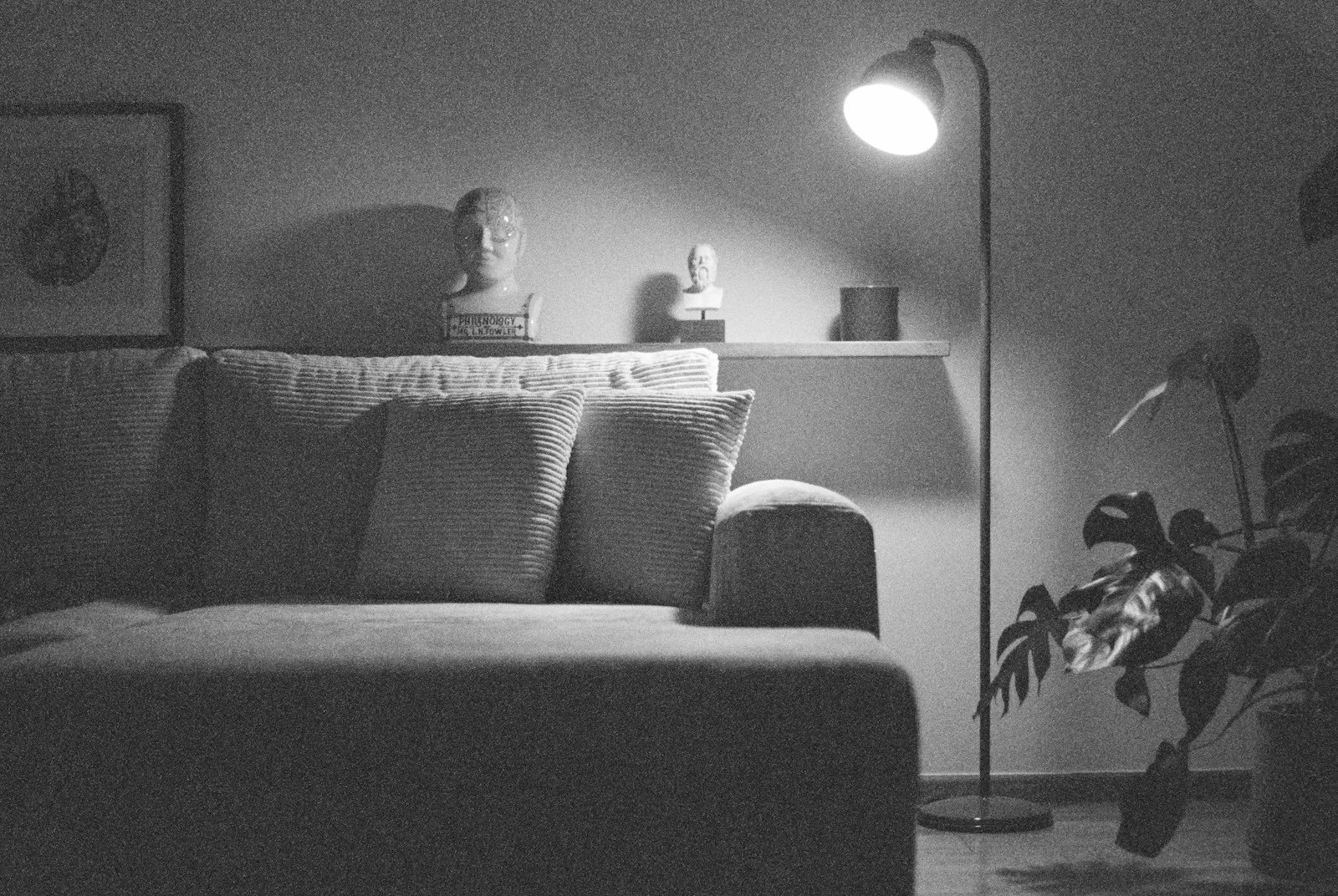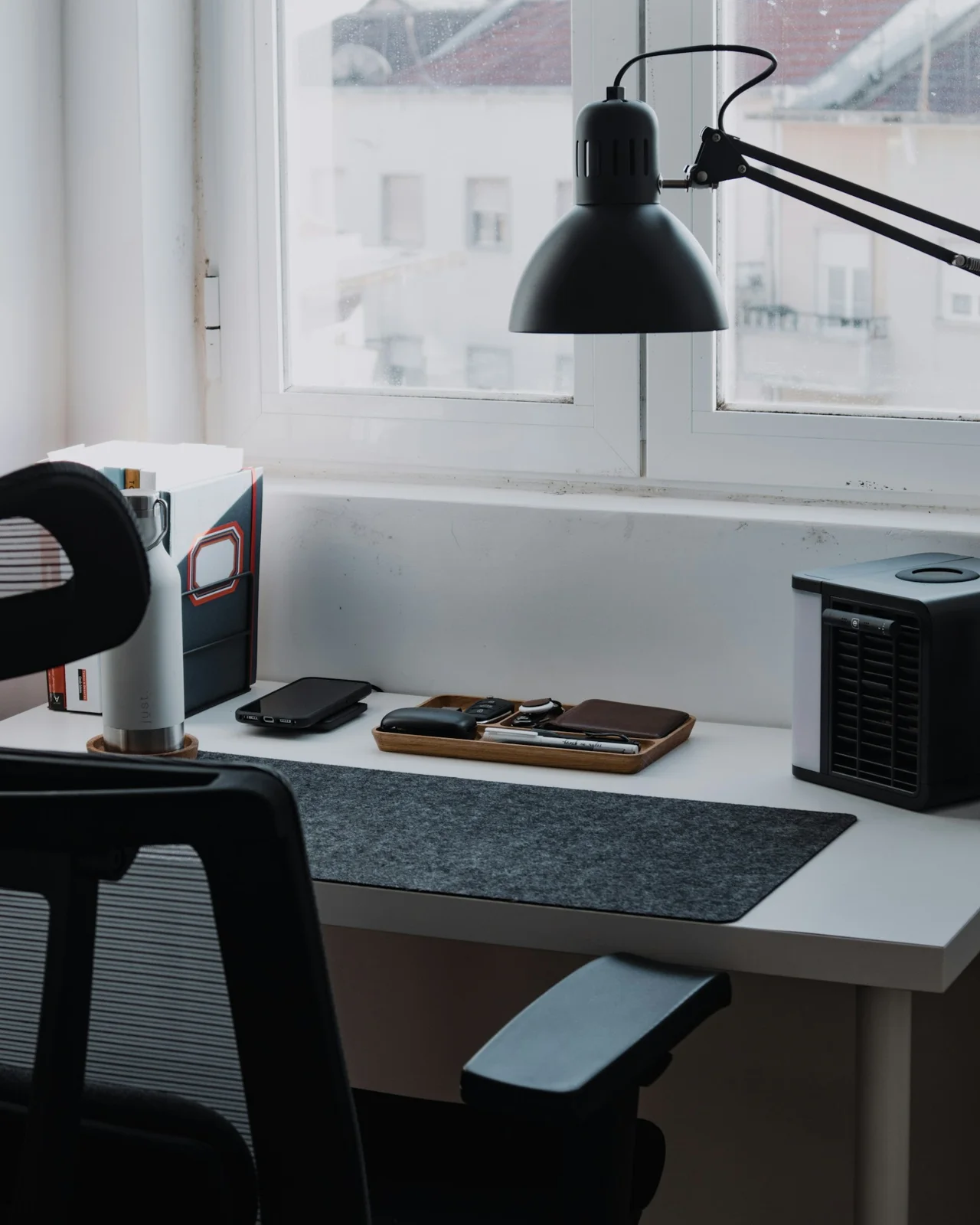
The dining corner becomes an office after dinner, but the light that works for a meal may not suit a laptop and a stack of papers. Before buying a desk lamp, sit in the evening setup you actually use. The useful question is where light is missing and where an existing light is getting in the way.
Find the reflection first
Look at the switched-off or darkened screen from your normal seated position. Notice bright reflections from a ceiling fitting, lamp or window. OSHA's workstation guidance recommends arranging lighting to reduce screen glare. Moving an existing light or changing the workstation's orientation may solve more than adding a stronger lamp beside the same reflection.
Then open a normal document and place a paper page beside it. Are you turning the page toward a distant light or leaning around a shadow? Change one thing at a time so you can tell what helps. Avoid working through persistent discomfort; ongoing eye symptoms deserve appropriate professional advice rather than another speculative lighting purchase.
Separate paper light from room light
A task lamp can direct useful light toward paper while the rest of the room remains comfortably lit. Compare the reach and adjustment of the arm, not only the bulb specification. A small attractive lamp that cannot extend over the working area may leave you writing in your own shadow.
Check the shade from the seated position and from the other seat at the table. An exposed bright bulb can be unpleasant for someone opposite you even if the desktop looks well lit. A diffuser or shielded design may be worth considering. The goal is a workable shared space, not a pool of maximum brightness in an otherwise dark room.
Measure the space the lamp occupies
A weighted base uses a portion of the table; a clamp requires a compatible edge and sufficient clearance underneath. Check that the chosen fixing is intended for the surface and does not interfere with an extending leaf, drawer or cable route. Do not improvise a clamp onto delicate furniture without the manufacturer's guidance.
Plan where the cable will run when the chair moves. Keep it away from spills and the route between the table and kitchen. If the lamp will be packed away every night, compare the folded footprint and how comfortably you can lift it. A permanent sculptural base may be less convenient than it looks in a styled office photograph.
Shop for the evening routine
Dimming and adjustment can be useful when the table does several jobs, but controls should be easy to understand. Check whether replacement bulbs are supported or whether the light source is integrated, and what service options the maker offers. Follow the specified bulb limits and electrical instructions rather than assuming any bulb with the right fitting is suitable.
Keep the packaging until you have assessed the lamp under normal conditions within the seller's return policy. Recheck both screen and page with the room lights on. If the lamp creates a new reflection, reposition it before deciding that the purchase has failed. A usable arrangement depends on the relationship between the light, your work and the room.
Sources & further reading
Published sources for the details and examples discussed in this story.