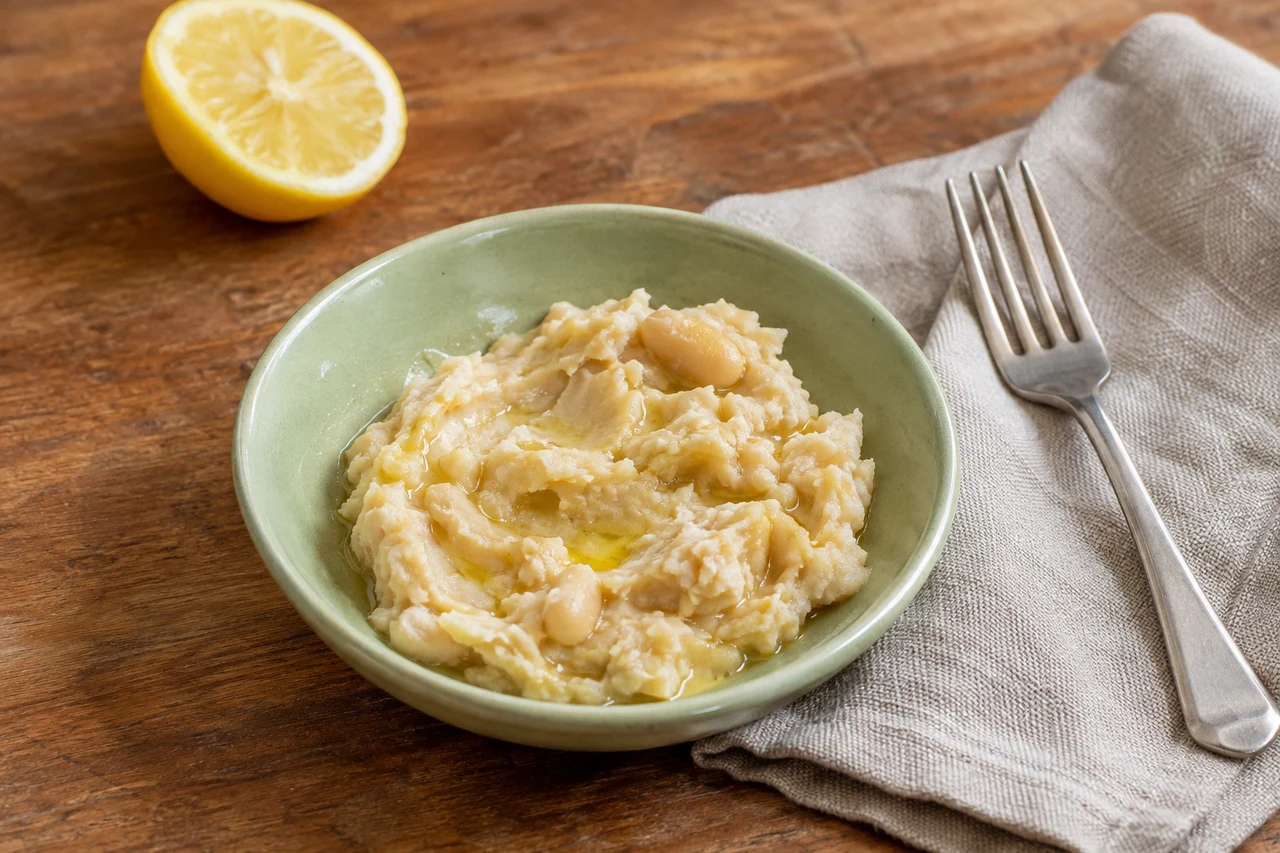
A small bowl of cooked beans need not become a completely smooth puree. For this original two-portion proposal, a fork leaves a deliberately coarse finish, while a defined extra spoonful of water and more mashing offer another direction. The quantities and method are editorial proposals, not a recipe prepared or tasted by us. They use commercially cooked beans explicitly suitable for ready-to-eat use under their package instructions; dry uncooked beans are not a substitute.
Gather a short, measured list
Use 250 grams of drained, commercially cooked ready-to-eat white beans; 1 tablespoon olive oil; 1 tablespoon freshly squeezed lemon juice; and 2 tablespoons drinking water. If wanted, add up to ⅛ teaspoon fine salt. Have 1 additional tablespoon water available only for the softer variation. These amounts make two small dip portions, not a claim about a complete meal or an individual's dietary needs.
Use a clean bowl, fork and measuring spoons. Check the actual bean and other ingredient labels, their condition and instructions before starting. Measure the drained bean amount rather than assume every can yields the same quantity. A familiar bowl and fork can serve this proposal; no new processor or specialist dip set is required.
Prepare the ingredients, then mash
Wash hands and use clean utensils and surfaces. Clean the can lid before opening, as FDA advises. Wash the lemon under running water before cutting it; FDA advises against soap or detergent on produce. Keep produce preparation separate from raw meat, poultry and seafood equipment.
Put the measured drained beans in the bowl. Press them against the bowl with the fork until most have broken but some small pieces remain. Add the oil, lemon juice and 2 tablespoons water. Stir, then press and stir again until the liquids are incorporated. The intended coarse finish keeps visible pieces; the instruction does not promise a texture achieved in a timed kitchen test.
Choose between the two proposed finishes
For the coarse version, stop when the mixture is combined and the pieces suit your preference. For the softer version, add exactly 1 more tablespoon water and continue pressing the beans more thoroughly before stirring again. That makes 3 tablespoons added water in total. It proposes a less coarse fork-mashed dip, not the smoothness of a tested blender puree.
Taste a small amount with a clean utensil if the ingredients are suitable for you, then decide whether to include the optional salt within the stated limit. Divide between two small dishes or share one suitable bowl. Serve promptly with the accompaniment you choose, checking its actual ingredients as well. No allergen-free, nutrition or clinical texture claim is made.
Make only the amount the occasion needs
Prepare near the time you intend to eat. Keep perishables appropriately chilled; FDA advises a refrigerator at 40°F or below and prompt refrigeration within its two-hour boundary, shortened to one hour above 90°F. Do not interpret lemon juice as a preservation method. This proposal establishes no new refrigerated shelf life for the finished mixture.
Before buying a larger bean assortment or a blender, decide whether this coarse preparation is the result you want to investigate. The softer variation changes one measured ingredient rather than the whole formula. A personal note after an actual attempt can record which finish you preferred; no such attempt or preference is claimed here.
Sources & further reading
Published sources for the details and examples discussed in this story.