A drying rack is useful only when it can be opened somewhere sensible and left there long enough to do its job. Folded dimensions are easy to compare online; the real decision includes wet garments, walking space and the room's moisture conditions. Begin with one typical laundry load rather than the largest rack in the shop.
Match the rack to the clothes
List the pieces that you usually air-dry and follow their care instructions. Shirts on hangers, long trousers and an item that must dry flat ask for different support. A rack with many closely spaced rails may sound capacious but still struggle with the pieces you wear most often.
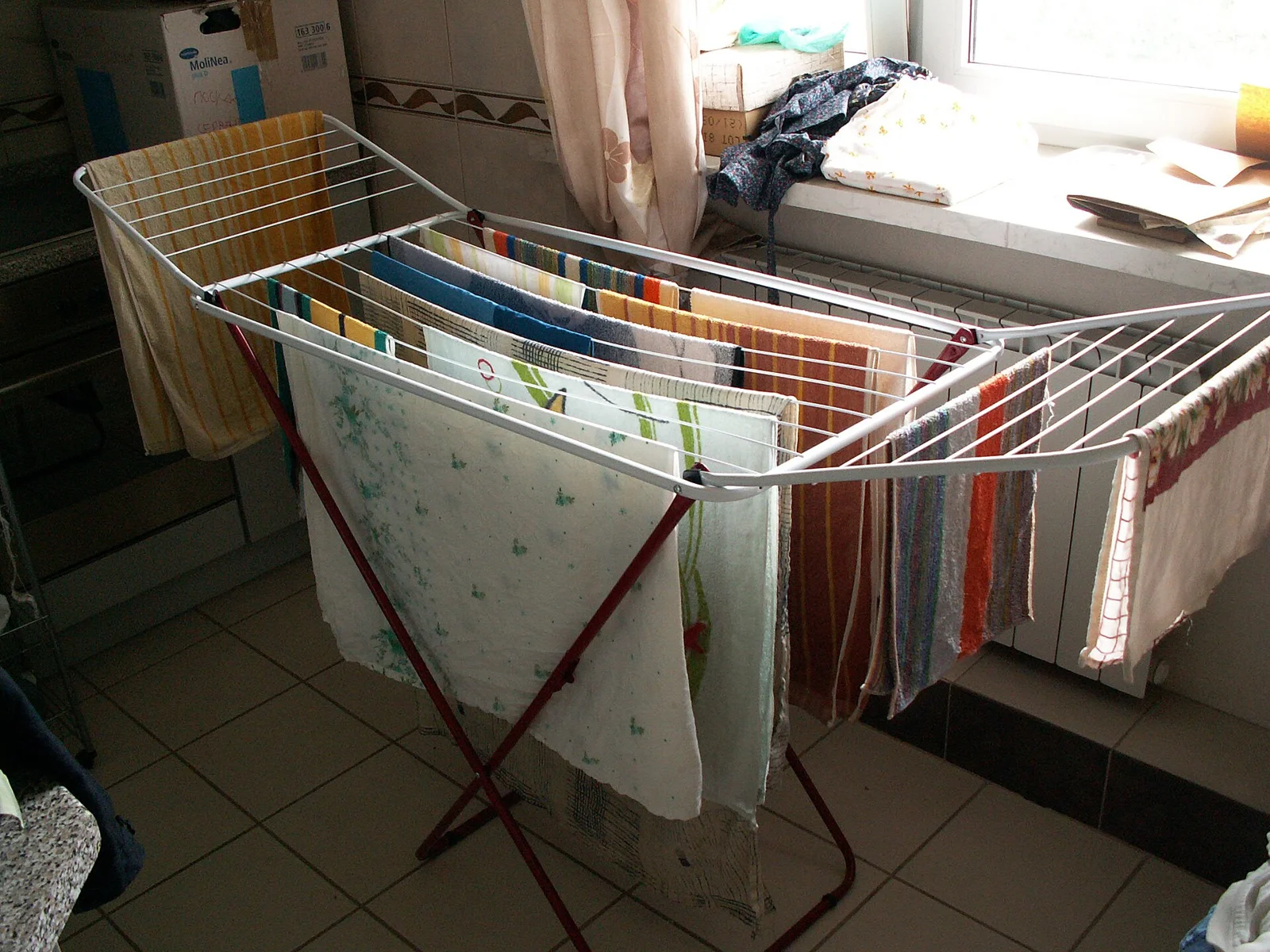
Measure the longest item in its intended drying arrangement, allowing for the floor underneath. Check the rack's stated load capacity and how weight should be distributed. Wet laundry weighs differently from a neat stack of dry clothes. Do not assume that extending wings or lightweight joints can support any arrangement just because the rails are physically long enough.
Reserve the open footprint
Mark the fully open width and depth in the intended room. Include projecting wings and the space needed to load the far side. Open the nearby door and move the chair as you normally would. A rack that blocks the route to the kitchen can become a daily annoyance even if it folds very thin afterward.
If the rack will move between rooms, compare its weight and handling when empty. Do not plan to carry a loaded, unstable structure around tight corners. A simple design in a consistent location may be easier to manage than a complicated tower that is repeatedly wheeled out of everyone's way.
Think about moisture, not just heat
EPA's mold guidance emphasizes controlling indoor moisture. Laundry drying should fit a room with appropriate ventilation and moisture management, not a cupboard closed around damp clothes. Watch for persistent condensation or damp conditions and address their cause. Buying another rack does not solve an existing moisture problem.
Avoid improvising a drying arrangement over a portable heater or obstructing heating equipment. Follow the equipment's clearances and instructions. Garments also have their own drying restrictions; more heat is not necessarily a suitable shortcut. If you regularly need faster drying than the room can reasonably provide, reconsider load timing or an appropriate alternative rather than crowding the rails.
Compare the details you will touch
Inspect the catches, folding action and feet. Can you open it without pinching your fingers or needing a clear floor bigger than the final footprint? Will its feet suit the floor surface? If outdoor use is intended, check the maker's guidance on weather exposure, stability and bringing the rack back inside.
Choose a storage place before ordering. The rack should fit there without preventing access to cleaning tools or scraping a wall every time it is removed. Useful accessories are those that fit your clothes: a few compatible hangers may matter more than a bundle of clips. Leave room around the garments instead of treating every available rail as a target to fill.
Sources & further reading
Published sources for the details and examples discussed in this story.