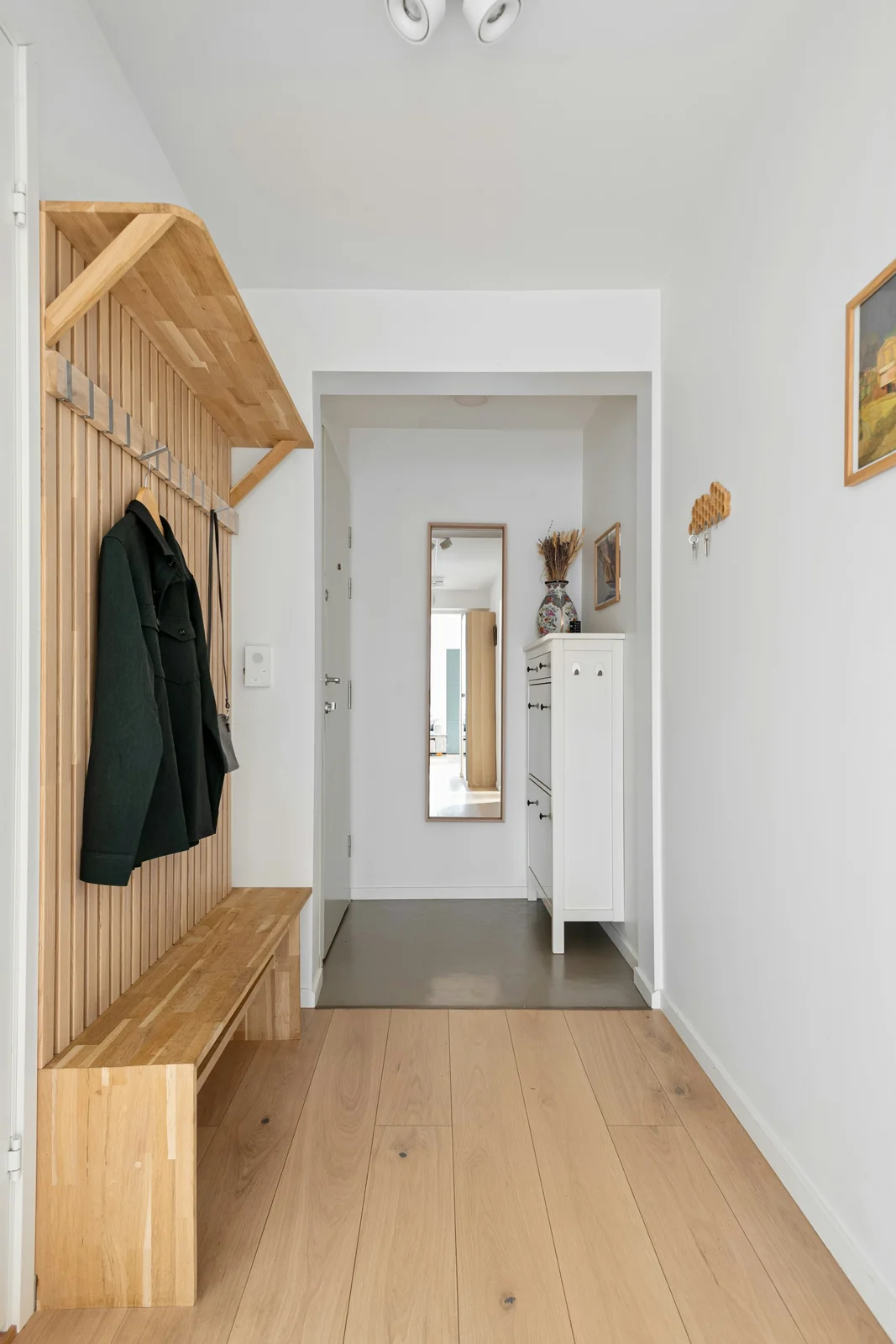
The entryway becomes a problem when several people need the same small patch of floor at once. A bench can offer a seat and storage, while hooks can keep bags off the ground. The better choice depends on the morning traffic: who pauses, who reaches, and where the open door needs to go.
Watch the doorway before measuring furniture
Notice one departure and one return. Does someone need to sit for shoes, or does everyone stop mainly to find keys? Which items are wet, heavy or used every day? A bench will not solve a missing-key problem unless it gives keys a reliable place, and a row of hooks will not replace a needed seat.
Mark the proposed footprint with paper or removable tape suitable for the surface. Include the space needed to stand in front of it, open nearby cupboards and pass while another person is using the area. Keep exits and normal routes clear. A furniture listing's width tells only part of the story in a narrow hall.
Choose a bench for sitting first
Check that a product is intended as a seat, with a stated load limit and assembly instructions. A low storage box or decorative shelf is not automatically a bench. Compare seat height with the people who will use it, and consider whether the surface gives enough room to sit without balancing beside bags or shoes.
Open storage below may make footwear easier to see, but it also leaves it on display. Doors can look calmer and require more clearance. A lift-up seat introduces a separate lid decision and may be awkward when someone is already seated. Try the whole movement rather than choosing storage capacity from a photograph.
Choose hooks for an actual load
Count the coats and bags that arrive together, not just the hooks you would like to see on the wall. A shallow row may keep the floor clear, but bulky winter coats still project into the route. Check the product's load guidance and the appropriate fixings for the wall construction. Ask for qualified help when you are unsure.
Do not ask children to reach over unstable furniture for a bag. CPSC's Anchor It campaign highlights furniture tip-over hazards; follow anchoring instructions where they apply. Hooks, benches and storage units should be selected and installed as the actual products require. A neat layout is not a substitute for proper assembly and secure fixing.
Try the smallest complete solution
A single useful seat plus a few well-placed hooks may serve better than a large matching hall unit. If seating is unnecessary, a small key dish and an appropriate coat solution might be enough. Keep occasional shoes and out-of-season layers elsewhere so the entry area has room for the current day.
Before purchasing, decide how wet items will dry and where muddy footwear can go without damaging surfaces. Choose finishes and removable liners according to care instructions, not assumptions about their appearance. Review the arrangement after a busy week: if the floor fills up again, the problem may be the number of items assigned to the doorway.
Sources & further reading
Published sources for the details and examples discussed in this story.