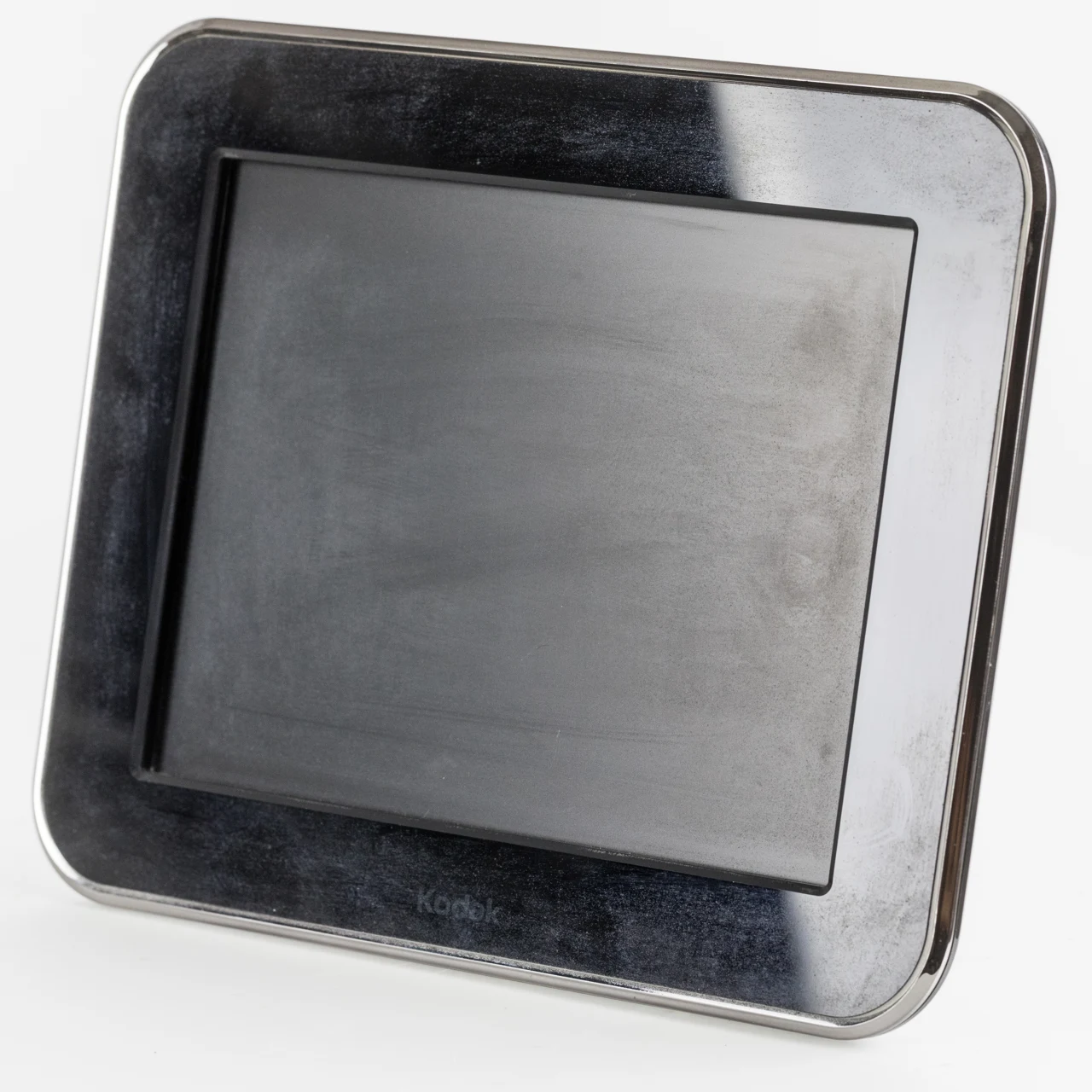
A digital frame can present an attractive collection without giving it a particular shape. Six unrelated favorites may be enjoyable one by one, while a selected sequence can make the last image change how the first is seen again. The useful story question comes before the device question, but the device still has to support what the selection requires. The lists below are invented editorial storyboards, not photo albums, family records or a display we tested. They describe intended relationships between six images. No particular frame is assumed to preserve their order, show every photograph or play the closing image exactly as proposed.
Sequence one: six independent favorites
Imagine these six proposed images in succession: a beach view, a birthday cake, a city street, a flower close-up, a mountain and a favorite room. Each can matter to an owner. The birthday picture need not explain the mountain, and the room need not lead back to the beach.
The collection's coherence may lie in the owner's private associations rather than in anything visible on the screen. That can be enough if the desired experience is a changing set of favorites. Calling it random does not make it a bad selection; it names a different kind of display.
The difficulty comes when the owner wants a modest visual story but expects the device to create one merely by showing personally important images. The relationships need to be chosen, rather than supplied afterward by an explanation nobody else in the room can see.
Sequence two: return to one invented courtyard
For a more deliberate proposal, keep all six images within a fictional courtyard. First comes a wide view containing a plain red chair and a small table. Second is a closer view of the chair's back. Third moves to an ordinary cup on the table, with part of the chair still visible at the edge.
The fourth image attends to shapes of light and shade across the courtyard paving. The fifth returns to the chair from another appropriate viewpoint, making its outline more prominent than in the opening. The sixth is another wide view in which the chair and table belong to the whole courtyard again.
These are six proposed frames, not instructions to enter a particular place or reconstruct an actual day. Their subject is a small place to pause. They do not rely on a photographed person, an inferred emotion or a caption claiming what happened between pictures.
Let the closing frame prepare the next beginning
The repeated chair gives the middle images a recognizable detail. The cup and the light provide departures from it. The final wide view then makes the chair one part of a larger place again, rather than leave the sequence at its closest detail.
If the display returns to the opening, the next wide view can feel like another invitation to look inward. That is the intended loop relationship. It differs from a chronology that builds toward a final achievement, and it does not need a caption to explain an imperfect family day.
An owner might prefer a different closing frame, but it should be chosen for what comes before and after it. Selecting six strong photographs independently is not the same as selecting a useful sixth photograph for this sequence.
Verify the actual display before buying for that idea
Google's Nest Photo Frame guidance provides a concrete caution: albums can be selected, but depending on the album, photo curation may remove poor-quality images or near duplicates. That documentation does not establish that our intended six-image sequence will play unchanged. Nor does it certify the ordering behavior of another frame.
Check the exact product's controls, selection behavior, order and audience visibility against the proposed use. A device that gives a pleasing changing collection may still be wrong for a fixed visual loop. Review which actual images and information are appropriate for the people who will see the display, rather than treat a private album name as a complete visibility decision.
Sources & further reading
Published sources for the details and examples discussed in this story.