A soft dip and a crisp carrier can give a no-cook lunch a clear contrast without a complicated recipe. The useful decision is whether you want distinct alternating bites or a more integrated mouthful. That is a preference about the plate, not a promise that two ingredients make a nutritionally complete meal. This is an explicitly untested editorial assembly, not a recipe we prepared or tasted. The named examples use ready-to-eat Sabra Classic or Roasted Red Pepper Hummus in the US 8-ounce tub and Wasa Sourdough Crispbread. No homemade hummus, raw flour mixture or unverified substitute is involved. Check that the exact products are suitable for you before considering the arrangement.
Start with the actual components
The manufacturer's Classic Hummus description identifies a smooth dip containing chickpeas, garlic and tahini. Its linked SmartLabel for UPC 040822346108 lists sesame as a contained allergen. The corresponding Roasted Red Pepper product, UPC 040822346146, also lists sesame. Changing the flavor does not remove that concern.
Wasa's US Sourdough page lists whole-grain rye flour, rye flour, yeast and salt, and says it may contain wheat and sesame. It also warns that the actual package can differ from the website. These are named product examples, not an allergy-safe menu. Review the package ingredients, allergen statements, dates and instructions for every item you would actually use; do not replace that review with a photograph or a familiar brand name.
Choose the amount you want to eat rather than treating a tub's size as a serving instruction for this meal. Use clean serving equipment and a suitable plate. No added oil, spice blend, garnish or fresh produce is needed for the two comparisons below, so the composition does not acquire a hidden list of extra ingredients.
Variation one: keep the contrast separate
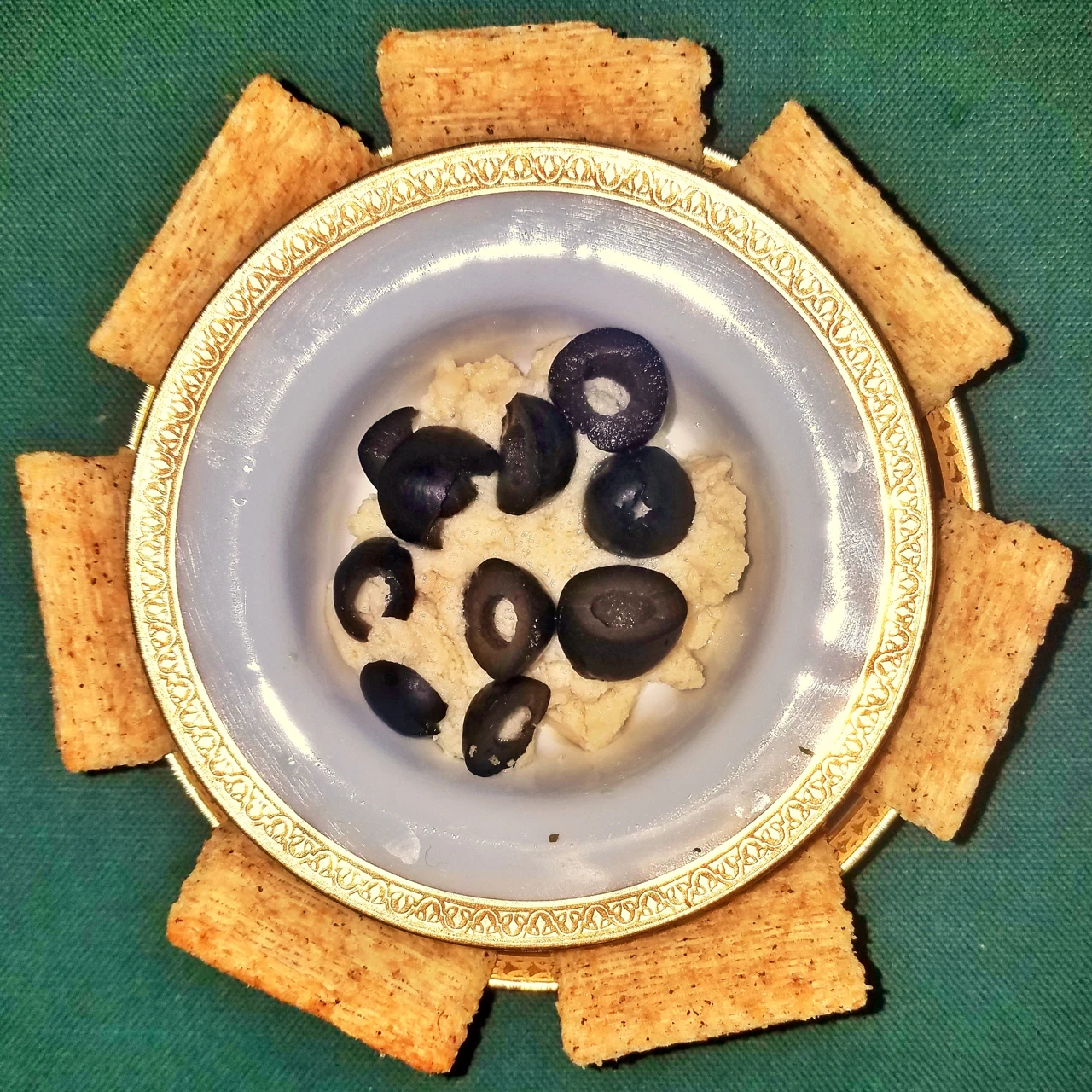
Place the hummus in a small suitable dish beside pieces of crispbread. The imagined experience alternates a soft spoonful or dip with the distinct crisp carrier. Larger pieces make the contrast between the two components explicit; the dip does not need to cover the entire plate to look intentional.
This version suits the person who wants control over how much dip accompanies each bite. It also makes it possible to stop adding hummus without leaving every remaining piece coated. The proposal concerns arrangement, not a tested claim about how long any particular piece will stay crisp.
Variation two: assemble a few small topped pieces
For a more integrated mouthful, place a little hummus on smaller pieces of the same crispbread immediately before eating them. Keep the remaining components separate rather than preparing a whole batch far in advance. The physical change is from choosing two separate elements to taking both together in one small piece.
This is not a recommendation to crush the bread into a soft texture or make food suitable for a swallowing difficulty. Nor does it establish a make-ahead storage method. If you prefer the distinct sound and resistance of the plain crispbread, the first arrangement may be more appealing. If you want the dip distributed across each small bite, the second addresses that preference without another product.
Choose one of two flavor finishes
With Classic, the finish stays within the named chickpea, tahini and garlic product rather than adding another topping. With Roasted Red Pepper, the manufacturer describes a sweet, smoky flavor from its pepper variation. That is the maker's description, not our tasting note. Either flavor can accompany either physical arrangement; buying both tubs is unnecessary unless you actually want both.
Let the labels govern handling
The two linked US SmartLabels state that the hummus should remain refrigerated and be enjoyed within seven days of opening, with the package's use-by date also observed. Sabra's FAQ specifies refrigeration at or below 40°F and disposal after two hours outside refrigerated conditions. These are manufacturer boundaries, not permission to ignore stricter conditions or the instructions on your own pack.
Wasa's rendered product page does not provide an opened-pack storage period. Follow the actual crispbread package rather than applying the hummus's refrigerated timeline to the bread or inventing a period for assembled leftovers. This feature proposes assembling what you intend to eat, not a shelf-life experiment.
Sources & further reading
Published sources for the details and examples discussed in this story.