The phrase connect two devices hides an important question: two of what? Sony's WH-1000XM5 headset guide describes a multipoint connection to two source devices. Its SRS-XB100 guide describes a Stereo Pair made from two speakers, with left and right channels. The same small number therefore appears in two different arrangements. Draw the sources and listening devices before assuming that either feature solves the other problem.
The multipoint example has one listening headset
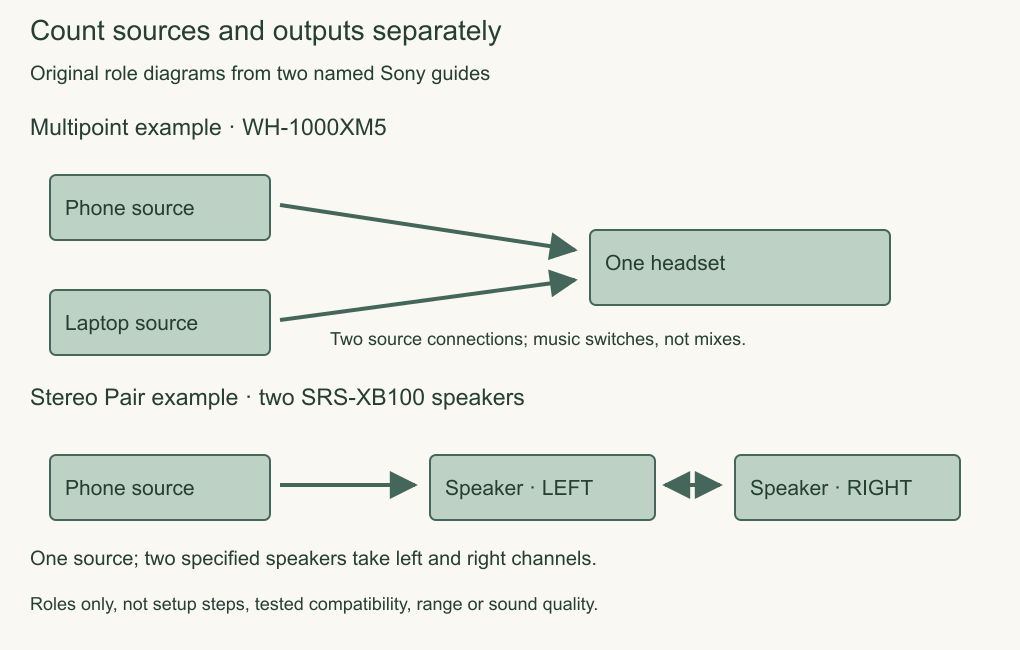
In the WH-1000XM5 guide, the headset can maintain Bluetooth connections to two devices when the relevant simultaneous-connection function is enabled. The examples include waiting for calls on two smartphones and switching music playback between two devices without reconnecting Bluetooth. Those are roles for two sources connected to one headset.
For an original fictional case, imagine Lee using a phone and a laptop with one headset. Lee wants to change which source supplies the music without repeatedly rebuilding the connection. That is the sort of source-switching question illustrated by the multipoint description. It is not a request to make the headset play two music programs mixed together.
The guide's playback explanation preserves that distinction. It says that if music is playing on the first device, starting playback on the second does not immediately replace what is heard; stopping the first allows listening to the second. A simultaneous connection is therefore not a promise of simultaneous mixed music playback.
The Stereo Pair example has two named speakers
The SRS-XB100 guide says that its Stereo Pair function requires two SRS-XB100 speakers. One plays the left channel and the other the right channel. Its instructions establish a Bluetooth connection from a source device to the relevant speaker after the speakers have been paired with each other.
Now imagine Lee instead wanting music from one phone to play as a left-and-right arrangement through two speakers. That is a different proposed system: one source and two listening outputs. The cited model-specific Stereo Pair description addresses that relationship; the headset's two-source multipoint feature does not create another speaker channel.
The requirement for two SRS-XB100 units also matters. This is not a statement that any two products bearing Bluetooth on their packaging can form this particular pair. A different speaker, another brand or a larger group would need its own adequate documentation. No combination has been connected or heard for this article.
Keep connections distinct from what plays at once
The original role diagram uses two arrows toward one headset for the multipoint example, then a single source feeding a two-speaker left/right arrangement for the Stereo Pair example. Arrows identify the documented connection roles; they are not measurements of radio range, latency, channel balance or audio quality.
That distinction helps Lee write a better requirement. “Phone and laptop connected to one headset, with music switched between them” names the first plan. “One phone feeding a left/right pair of two SRS-XB100 speakers” names the second. Neither can be shortened to two devices without losing the useful part.
The speaker guide includes its own setup conditions and cautions, including turning down volume or stopping playback before establishing a connection to avoid sudden loud output. Follow the actual complete guide if using the equipment. This comparison supplies no replacement button sequence, volume setting or troubleshooting procedure.
The old app name needs its current context
The headset multipoint page uses the name Sony | Headphones Connect. Sony's own help-guide notice says that in October 2024 the app was updated to Sony | Sound Connect. The headset guide's top page likewise identifies the new name and screen and points users toward current model support.
Do not search for an old screen label and conclude that a current app has the same layout. The useful purchasing distinction here concerns the documented source and output roles. Actual operation still needs the support information appropriate to the model, software and app in use. No latest firmware version, phone compatibility or current control path has been tested or asserted.
Sony's US app page also notes that some features depend on devices and directs users to compatibility and support information. A new name does not establish every feature for every device. Keep the exact headset or speaker model with the feature being considered.
Buy for the arrangement you actually want
Before buying a second item, finish one sentence naming the source count, output count and intended behavior. If Lee wants to alternate phone and laptop music through one headset, a second speaker does not answer that need. If Lee wants the named two-speaker stereo arrangement, a multipoint headset specification does not establish it.
Then verify the actual products and required conditions through their current official guidance and applicable seller terms. A demonstration, where appropriately available, can answer a different question from this document comparison. Do not report an unperformed demonstration as proof that a proposed laptop, phone and audio device work together.
The two Sony examples are useful precisely because their roles differ. Multipoint can describe more than one source connected to a listening device; this Stereo Pair describes two specified outputs taking left and right channels. The purchase becomes easier to assess when those nouns remain attached to the number two.
Sources & further reading
Published sources for the details and examples discussed in this story.