A pet's everyday belongings need not disappear for a room to feel considered. Their visible purpose can be part of the room's identity. The decorative question is what the surroundings can do with the items already serving the animal, rather than how those items might be disguised as something else. The two scenes below are fictional. Each assumes an animal already has suitable established resources, with placement and care needs that the household understands. RSPCA cat-environment guidance prioritizes appropriate resting places, hiding opportunities and room for ordinary activity. A pleasing color relationship does not establish that those needs have been met.
Start with the belongings rather than a matching collection
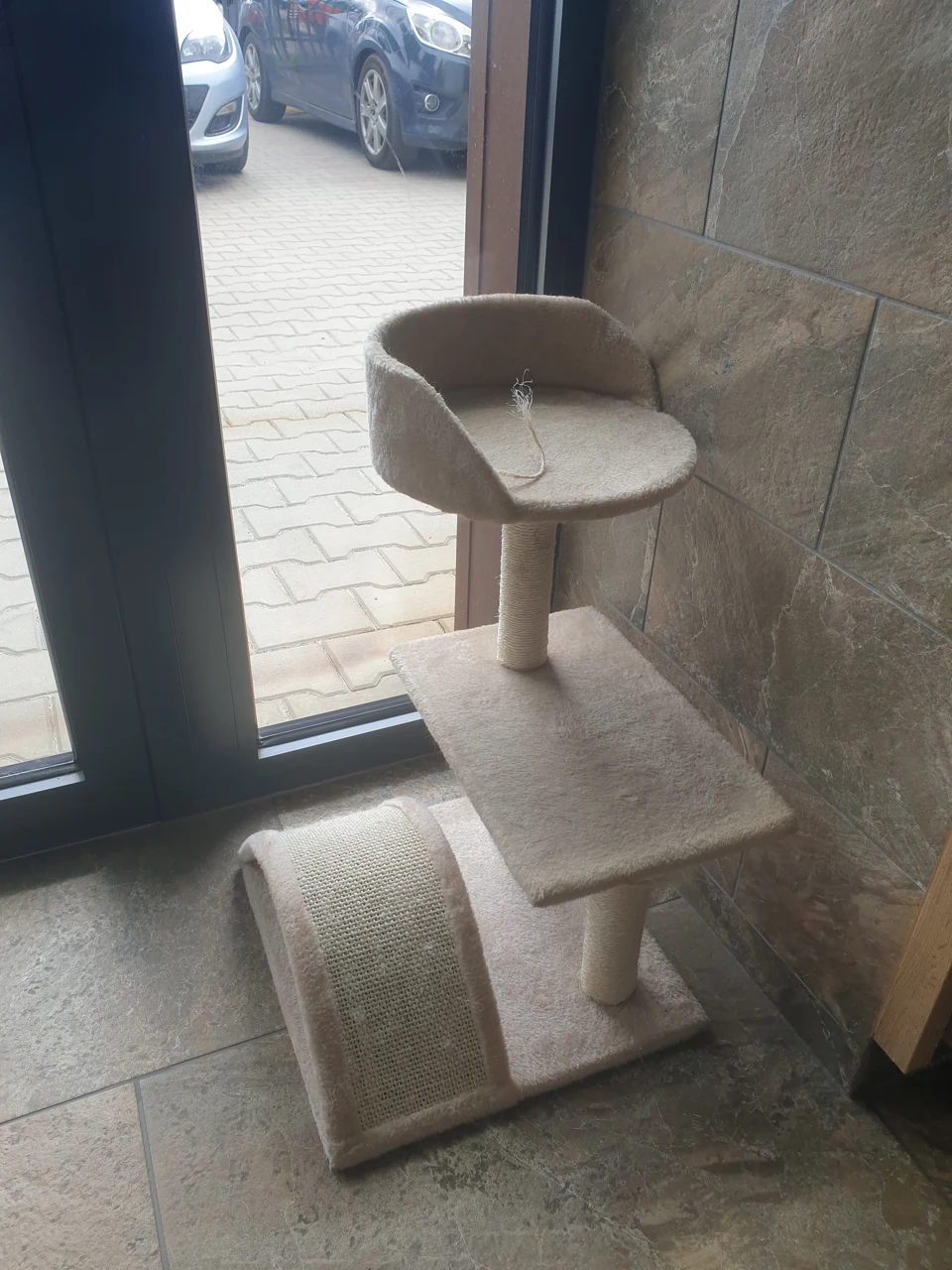
Imagine a room containing a suitable cat bed with a plain green outer surface and an established scratching item. For this visual comparison, neither changes location, construction, covering or use. The animal's access remains as it was. We are not proposing that a decorative substitute can do the same job simply because it looks similar.
The owner would like these ordinary belongings to feel acknowledged from the human sitting area. That is a smaller problem than making every object match. It also leaves room for an item to remain visibly a cat bed or a scratcher, without needing a cover that makes its function harder to recognize.
First scene: repeat a color elsewhere in the human area
In the first imagined room, a plain green cushion already owned by the household sits on the sofa. Its color forms a loose visual relationship with the cat bed across the room. The shades are not assumed to match exactly; the connection is simply readable in this fictional view.
Nothing new has to be wrapped around the bed or attached to the scratching item. The echo happens among the human furnishings. The cat's resources remain ordinary resources rather than pieces pressed into a coordinated display.
If the owner adds green to the lamp, rug and several storage boxes, the small relationship could become an entire room scheme. That may be wanted, but it is not necessary to explain why one green bed is present. A single repetition can acknowledge it without making the room revolve around its color.
Second scene: let a shape connect without repeating color
For the alternative scene, imagine the same pet belongings and the same established positions, but a different available cushion is used. This cushion has no green. Instead, the room already contains a rounded chair back whose curve can be seen in relation to the bed's outline from the ordinary sitting area.
The connection is now a shape rather than a palette. The bed need not become the focal object, and the scratcher's different material need not be recolored to participate. Some items can connect loosely while others remain visible because they have a real purpose.
I would choose this second version when the owner likes the room's existing colors and does not want one pet item to dictate a new palette. The first version may be preferable when the green cushion is already enjoyed. Neither is an assessment of which room the animal would prefer.
Decline the attractive substitution that changes the job
A decorative basket might seem a more harmonious shape than an established pet bed, but the resemblance alone says nothing about whether it is an appropriate replacement. Likewise, enclosing or relocating a resource to make it less visible changes more than the room's picture. Those decisions require their own assessment rather than approval from a styling comparison.
Before buying a coordinated pet collection, separate the actual replacement need from the desire for a more uniform photograph. Keep suitable existing items where they serve their purpose, and make any optional visual connection through furnishings the household already uses. If no echo feels worthwhile, a visible functional item can simply remain one.
Sources & further reading
Published sources for the details and examples discussed in this story.