A larger tent can seem like the simplest answer to a crowded sleeping arrangement. That purchase becomes less simple when the available ground is already defined. Before comparing floor plans, establish where a tent may actually go. A June 2021 National Park Service notice for Lake Meredith offers a useful starting principle: use existing camping areas and find a suitable site rather than making one. The notice is an archived source, not permission for a current trip.
| Information | What it can answer | What remains separate |
|---|---|---|
| Archived Lake Meredith notice | The dated source’s existing-site and no-alteration guidance | Current permission and rules for your actual trip |
| Current destination or site information | The documented conditions for the actual place | Whether a particular product meets its own setup requirements |
| Exact tent instructions | The documented setup for that model | Permission to use additional ground |
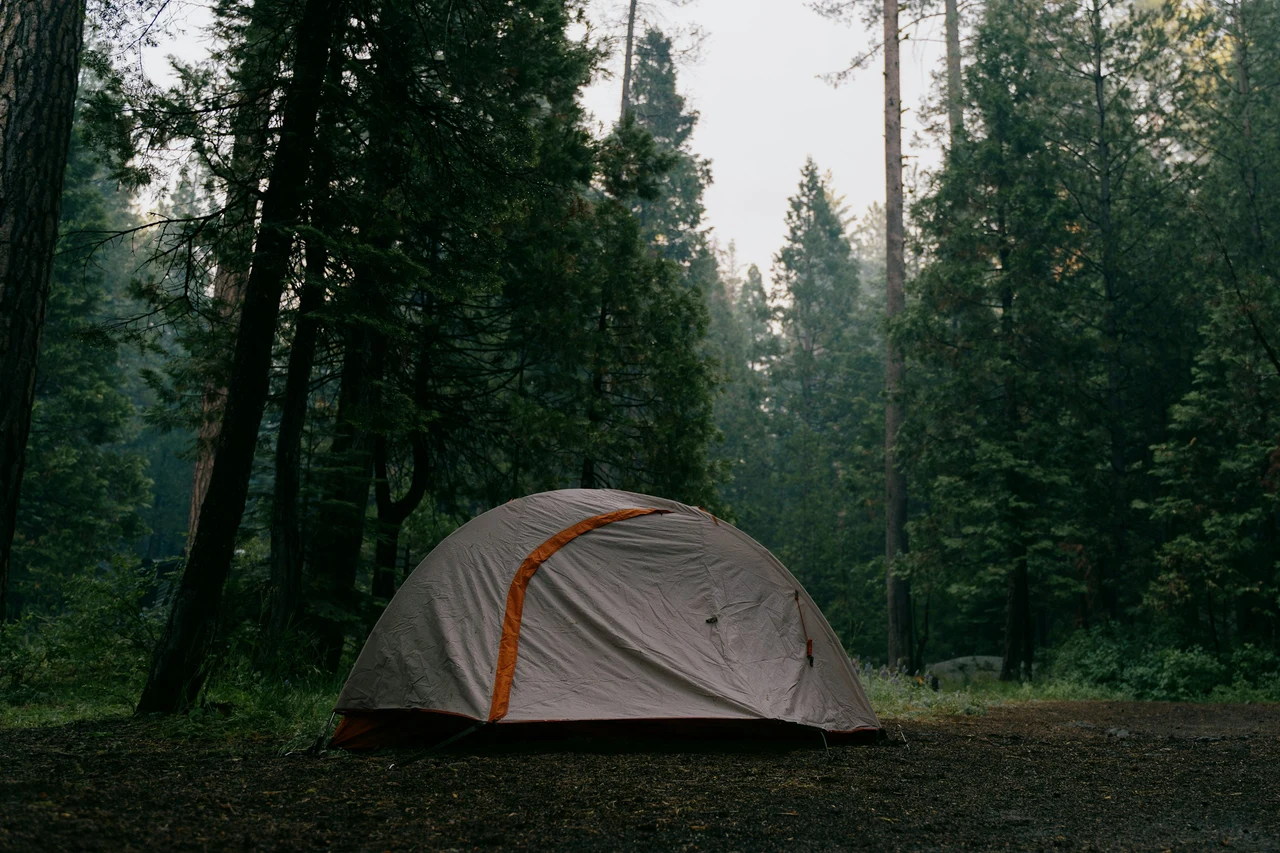
| Context photograph from Pinecrest | An ordinary forest-tent scene | Site designation, compliance, permit or tested fit |
Read the place and date with the advice
The Lake Meredith notice discusses camping on durable surfaces, including maintained campgrounds and designated sites. It advises using existing sites, keeping campsites small and avoiding changes to a site. These are the parts of that dated notice used here. They support a practical order for planning: identify an existing permitted camping area before deciding that equipment needs more space.
Do not turn an archived notice from one destination into a current booking confirmation, a closure update or a universal rule for every park. Check the current instructions for the actual destination and the specific type of camping you intend to do. Record a real response or published requirement separately from a question you have merely sent. An unanswered enquiry leaves the permission question open.
Compare two ground choices before comparing two tents
Imagine two possible layouts at a campsite. In the first, the proposed tent can be considered within the existing provided tent area, subject to the site’s actual rules and the manufacturer’s setup requirements. In the second, the preferred larger layout would extend onto adjoining vegetation and require clearing or altering it. These are invented planning alternatives, not a survey of a real site.
The second option is not solved by purchasing a bigger tent. Pause that layout and resolve what ground may be used. The source’s advice to find a site rather than make one gives no basis for removing plants, flattening ground or creating another tent area. If the permitted place cannot accommodate the intended arrangement, change the equipment plan or seek an appropriate alternative through the destination’s actual rules.
A floor dimension is only one piece of the equipment question
A shop listing may provide an internal floor length and width. Keep those figures attached to the exact product, and consult its actual setup instructions for the complete arrangement. A rectangular floor measurement alone does not establish the full space required to pitch and use a particular tent. This guide does not calculate a named model’s footprint or confirm that a particular sleeping pad fits.
More fundamentally, a manufacturer’s dimensions cannot grant permission to occupy ground outside a site. Keep the destination’s usable area and the equipment’s documented requirements as separate records. Compare them only after each is known. An attractive diagram in a shop can help explain a product, but it supplies no information about the permitted boundary of your campsite.
Use the photograph for its actual role
The cover photograph shows a tent in a forest setting. Its source identifies Pinecrest, California; it is not a photograph of Lake Meredith. It does not prove that the pictured ground is a designated campsite, that the surface satisfies a particular rule, or that any permit or booking condition has been met. It also supplies no verified identification of the tent model.
That limit is useful when browsing gear more generally. A forest photograph can help communicate the experience a product is marketed around while leaving the site and equipment questions unanswered. Do not copy a photographed pitch as an approved plan. Bring the decision back to the actual destination information and the actual instructions for the item being considered.
Make the purchase follow the resolved site plan
A short decision record can contain the destination and trip date, the current camping instructions consulted, the specific site information, and the exact equipment documentation. Keep outstanding questions visible. For example, asking whether a particular tent arrangement is permitted is not equivalent to receiving an affirmative answer about that arrangement. Preserve the answer itself when it arrives.
Only then compare products that could serve the resolved plan. Check current seller specifications and return conditions, especially where a setup assessment would affect whether an item may be returned. There is no performed pitch test or product endorsement here. The buying advantage is a clearer sequence: first establish the place and its conditions, then compare equipment without assuming that more floor space creates more usable ground.
Sources & further reading
Published sources for the details and examples discussed in this story.