A familiar park can become a route recognized by its endings: the gate, the corner where the path turns, the place to head home. Returning need not mean finding a new attraction within it. It can mean noticing how the same few forms change their relationships as a viewpoint changes. The two visits here belong to an invented park, not one we inspected. Assume ordinary permitted paths and stopping places are available for the fictional visitor. In a real park, current conditions, designated areas and local instructions take priority. NPS trip-planning guidance explicitly separates preparing for conditions from choosing an activity; an interesting view does not establish that a position or route is appropriate.
First visit: follow the edge of one shape
Imagine a broad tree canopy visible from the main path. Its lower edge is irregular, with a deep dip near one end and a smaller rise above a bench. On this visit, the person's interest is simply in that outline against the open space behind it.
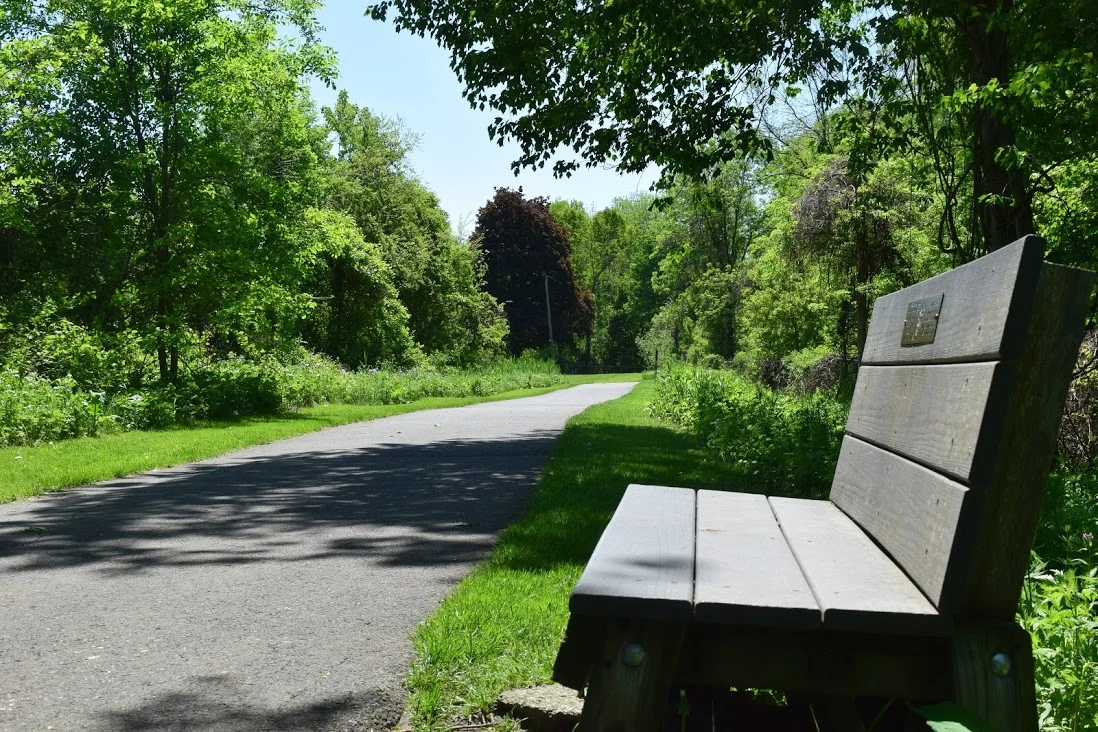
They do not need to identify the tree, find a matching specimen or collect a set of canopy shapes. One outline is enough. From an existing suitable stopping place, the bench appears almost tucked into the canopy's edge. The interesting relationship is between a small made object and the much broader natural form above it.
The visitor can stop there and then return. If the outline is hard to see because people are passing or the conditions have changed, there is no requirement to find another position that completes the idea. A small interest need not become a task owed by the park.
Second visit: watch two familiar forms separate
For a later imagined visit, keep the same canopy and bench, but follow how their relationship changes along the permitted path. At the first suitable viewpoint, the bench appears to touch the dark outline of the foliage. Farther along the existing route, a gap opens between them. The bench now reads as a separate shape within a larger area of open space.
Nothing in this story requires the tree or the bench to move. The change comes from the observer's relationship to them. That is a different interest from the first visit's canopy outline: now the subject is the moment two familiar forms cease to overlap.
The person might stop at an available appropriate place after noticing the separation, rather than continue until the familiar route's far end. They have not failed to finish an outing. They have found the particular comparison that made this return interesting.
Let a distraction become another possible ending
Suppose a passing cloud changes the bright background before the imagined visitor reaches the second view. They could remain interested in the overlap, or decide that the changed light is enough to notice for today. Neither response needs to generate a photograph or a record of what was achieved.
If someone accompanies them, that person may see a different relationship or simply want ordinary conversation. The noticing idea can be offered without turning the walk into a lesson. The shared outing need not wait while one person completes a private visual assignment.
Keep the visit smaller than a new equipment plan
No specialist viewing equipment is required by these fictional examples. Before buying something to make a familiar park feel new, ask whether the missing element is an object or a different question. Binoculars or a camera introduce their own reasons to go, which may be enjoyable but are not necessary for comparing a canopy edge and a bench.
Actual access, surface conditions, weather and personal needs remain separate decisions. Stay within the park's permitted places rather than moving onto planting, a closed area or an unsuitable position for a cleaner view. A relationship that cannot be seen appropriately can remain unseen.
Sources & further reading
Published sources for the details and examples discussed in this story.